Loving relationships ought to provide security, support and love. However, they can also become sources of worry, burdening us with anxiety and stress. It is in this anxiety, burden and fear of loss that we begin to develop patterns of toxic attachment. Toxic attachment patterns develop gradually (rather than rapidly) as a result of dependency, fear within the relationship, unbalanced emotions and co-dependency.
While you may think you love your partner, you probably have a strong sense of fear about losing them. You may sacrifice your own needs in favour of your partner’s, ignore signs that the relationship is unhealthy, and stay in a painful relationship because you cannot imagine living without the other person.
Let us have a look and see what love may look like at its core, that is, actually a toxic attachment, which is why it is important to identify it so that you can avoid damage to your self-esteem and emotional well-being as well as to your sense of self.
What Is Toxic Attachment?
A toxic attachment occurs when your relationship has an emotional bond that is unhealthy due to being more reliant upon fear than love for the connection between you two. There is typically a lack of mutual support and trust in the partnership, while both parties rely more heavily upon anxiety and dependency than emotional support from one another.
A healthy relationship provides partners with secure feelings that last throughout their time apart from each other. Toxic attachments do not typically exhibit clear signs of physical abuse, but they will typically contain elements of confrontation, emotional instability, and lack of self-regulation. Over time, these forms of attachment can result in loss of self-confidence, poor mental wellness and a destruction of one’s sense of individual identity.
Signs of Toxic Attachment
A toxic relationship is not very obvious and is more emotional than physical. This type of relationship is gradually damaging to how you think, feel and react to a relationship.
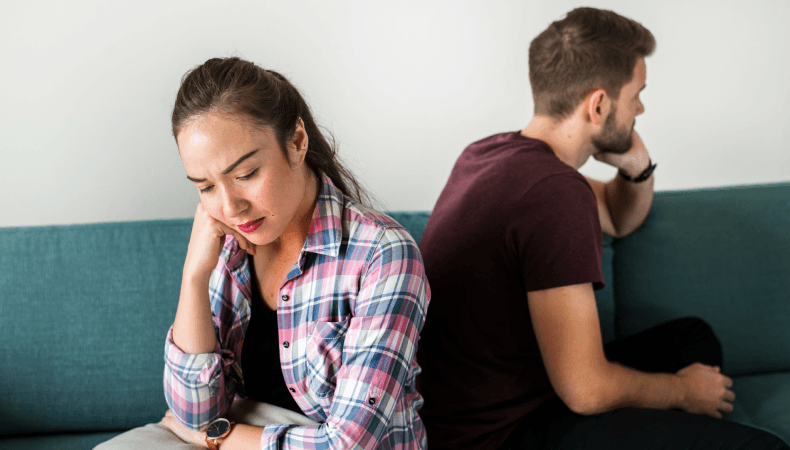
1. Constant Fear of Losing Them
Image Source: familytlc.ca
You may have been feeling anxious all the time, even when there are no signs of trouble in the relationship. You are constantly worried about being left by your partner and will think about multiple different scenarios of what they could possibly be doing. The smallest changes in their tone and texting patterns and their behavior will make me overthink and stress about my emotions.
Over time, this constant state of worry causes your mind to be constantly awake and alert rather than relaxed.
You’ll constantly feel:
Restless
Over-alert
Emotionally unstable
2. Emotional Dependency
Your happiness starts depending entirely on them. When they are present and engaging, you are typically relaxed and content, but when they’re distant, you feel down.
This leads to creating an unhealthy emotional imbalance in which your personal stability is in effect dictated by external behaviors and thus doesn’t rely on your own interior strength.
But intensity often comes from:
Fear of loss
Emotional highs and lows
Uncertainty
3. Need for Constant Reassurance
Eventually, you start failing to recognize your individuality because your personality, preferences, and priorities are all beginning to change to mirror those of your partner. If you continue on this path, eventually you won’t recognize your authentic self, and you’ll have become emotionally combined with your partner.
You feel valuable when they:
Text you
Choose you
Validate you
4. Loss of Identity
You find it challenging to express your needs or tell your partner no. To avoid distance or conflict, you allow them to abuse or mistreat you. Continued behavior would lead to the suppression of emotions and internal frustration.
5. Lack of Boundaries
Many times, rather than feeling like you’re being supported, you feel completely drained after an interaction. When interacting with them, you may feel anxious, overwhelmed or mentally exhausted rather than calm.
6. Jealousy, Control, or Possessiveness
Image Source: thriveworks.com
You experience an overwhelming sense of emotional fatigue, instead of an overwhelming sense of emotional support. You may become emotionally drained, anxious or overwhelmed as opposed to at peace after you interact with others.
7. Emotional Exhaustion
You are not staying in this relationship because it is a positive experience, you are only staying in this relationship because it makes you afraid to be alone and being afraid of being alone increases your dependence on this relationship and limits your ability to make rational choices.
Why Do Toxic Attachments Happen?
Let us have a look at the patterns of emotional and psychological behavior that determine how you form relationships and respond to and behave in them.
1. Childhood Emotional Patterns
Early attachments formed during childhood create the foundation for individuals’ adult attachment styles. Children develop a sense of emotional safety or lack affection based on how consistently or inconsistently their caregivers provide love to them.
This affects how adults form relationships, leaving them fearful of abandonment and consistently seeking reassurance from others.
If a child experiences:
Inconsistent affection
Emotional neglect
Unpredictable caregiving
2. Attachment Styles
Image Source: thriveworks.com
When emotional needs are not met consistently, they will develop attachment styles based largely on how their caregivers responded to their emotional needs. Anxious individuals are afraid of being abandoned by their partner.
Avoidant individuals fear creating closeness with their partner. And disorganized individuals experience fear of both.
As adults, they may:
Fear abandonment
Seek constant reassurance
Struggle with emotional stability
3. Trauma Bonding
The combination of high and low emotional experiences in a relationship allows for the formation of an addictive bond between partners through attachment. This cycle of using affection to create anticipation, then using distance or pain to create feelings of anxiety or fear of the loss of the relationship, keeps them bonded together emotionally, even at times when the relationship is unhealthy.
You experience:
Hurt → Distance
Then → Affection
4. Low Self-Worth
Low self-esteem results in individuals developing a significant dependency upon their partners for personal validation and for establishing their identity. As a result, the way that a partner treats an individual significantly impacts his/her self-worth. This dependency results in a potential for the individual to become emotionally attached to their partner in an unhealthy way or to develop an unhealthy attachment.
5. Fear of Being Alone
For most individuals, the pain of being alone is greater than the pain of being in a toxic relationship; consequently, they continue to stay attached to an unhealthy relationship, thereby reinforcing their unhealthy emotional patterns.
How Toxic Attachment Affects You
A long-term toxic relationship negatively impacts your emotional state (as well as in all relationships with the emotionally damaging individual). Some common manifestations of that emotional state can be experienced as:
Low self-esteem
Anxiety and overthinking
Emotional instability
Difficulty trusting others
Loss of independence
All toxic relationships include manipulation, domination and repeated emotional abuse which chips away at both you and the person’s sense of identity.
How to Heal from a Toxic Relationship
By creating distance, facing the facts and feeling the rage to release pent up feelings toward the abuser are part of the process of recovering from toxic relationship. By making these changes you can break the cycle of abuse and gain clarity.
Establishing a new identity and sense of self – Work on rebuilding your self-worth and independence by surrounding yourself with people who will support you. With time and patience you will eventually have a healthier relationship with yourself.
Key steps to heal:
Cut off or limit contact: This allows for emotional separation and gives you clarity.
Accept the reality: Stop making excuses for the abuse and admit that the relationship was unhealthy for you.
Let your emotions out: You don’t need to suppress your anger. Allow yourself to feel these emotions and express them in appropriate ways.
Reconnect with yourself: Find your old hobbies and interests and rediscover who you are.
Seek out support: Talk to someone you trust or consider professional help.
Create and maintain boundaries: Learn how to protect your emotional space.
Work on self-worth: You need time to heal before attempting another relationship.
Conclusion
You should not feel afraid when you love someone. You shouldn’t lose your identity just to keep someone who doesn’t love you in return. When you have a toxic attachment, it makes you hold onto them tightly. When you heal from that attachment, you learn how to be independent of that person. As soon as you are no longer afraid of losing out on love… you will be able to love another person in a way that both of you can benefit from.