Living in a joint family after marriage blends support, traditions, and challenges. And can be equally exciting. Couples thrive by sharing responsibilities, setting boundaries, nurturing intimacy, and practicing open communication. Respect and gratitude ensure peace and love in a multi-generational home.
Marriage is the start of a shared journey. Not only with your partner but with a family too. And moving into a joint family adds a layer of complexity. It can be exciting, but at the same time, terrifying. Joint family marriage brings together generations under one roof. This combines traditions, responsibilities and most importantly expectations. For many, it offers emotional support, financial stability, and companionship.
But for others, it tests patience and boundaries. Which side are you on? Understanding the nuances can help couples thrive without losing intimacy, peace, or individuality.
Tips for peace after moving into a joint family after marriage
1. Understand the dynamics of the family
A joint family marriage isn’t just about living together. Think of it this way. It involves interwoven routines, diverse personalities, and varying expectations. Every member of the family has their unique habits and responsibilities that shape the entire life of the household. After moving in after marriage, you need to acknowledge these differences. This is the very first thing you need to do if you want to prevent misunderstandings later on.
Take your time to observe everyone’s routines and listen to what they have to say. When you learn from their experiences, you get to know a little bit more about them.
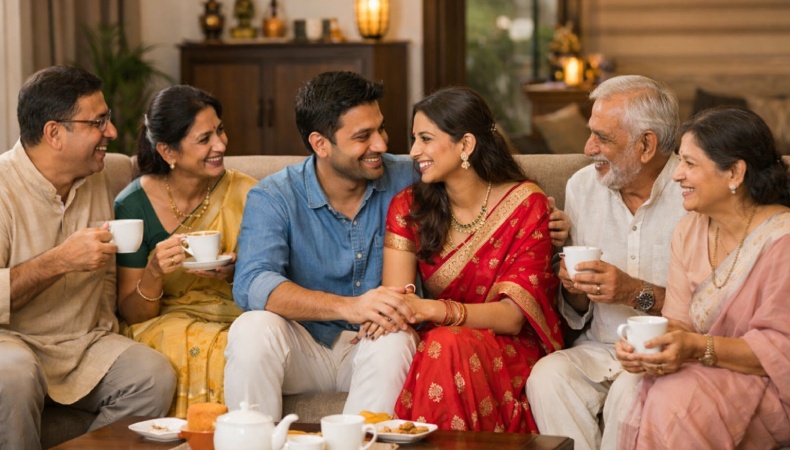
This is the beauty of a joint daily. The shared support system of parents, grandparents, siblings, and even the pet can provide guidance during challenges and celebrate your achievements as their own.
Still living in such a dynamic household will require adaptability. As a couple, you must be patient and empathetic.
2. Share responsibilities
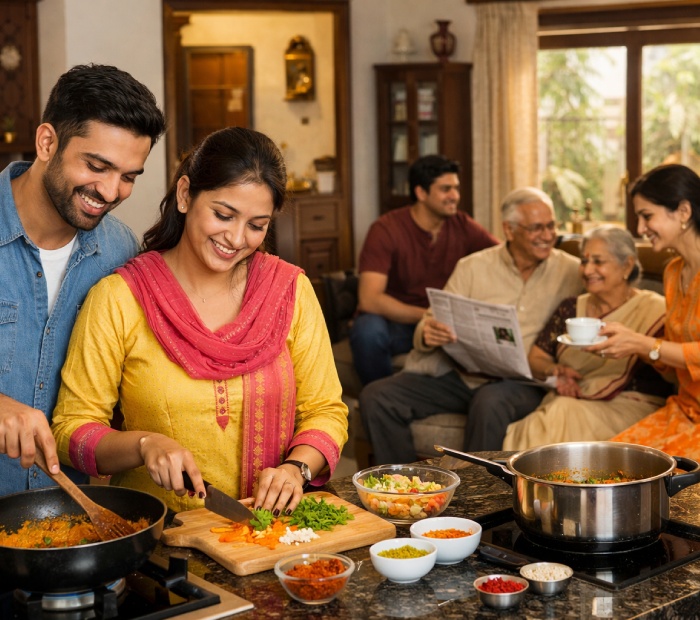
It is your family too. In a joint family marriage, sharing responsibilities is what forms the backbone of harmony. Assign tasks equitably by balancing household chores, financial contributions, nd caregiving duties. When you participate in everyday moments like cooking or shopping, it creates the best moments for bonding. Even a simple task such as preparing a cup of tea together can seem mundane but is an opportunity to bond.
Financial contributions too help a lot. When resources of the entire family are pooled together, it ensures stability, facilitates savings, and supports long-term investments. Each member’s input contributes to a sense of security and cohesive responsibility. Couples who approach shared duties as opportunities rather than obligations often feel more integrated into the family system.
Maintaining a romantic bond can feel super challenging especially in such a crowded home. Yet couples can cultivate intimacy. Even the subtlest of gestures like remembering preferences or sharing a joke can strengthen emotional closeness. It can be really surprising how even the smallest eye contact, shared laughter, and small surprise can work so wonderfully.
Even in busy household, couples need to carve out private moments just for themselves. Take a late-night walk, or head out to the mountains for a spontaneous vacation. Living with extended family does not mean you need to sacrifice or dim your romance. You only need intention.
4. Set boundaries
Boundaries are essential in every relation. More so in a joint family marriage. Respecting privacy and personal space prevents burnout and conflict. Learn to say “no” without guilt. Boundaries apply to everyone. Communicate your expectations clearly and calmly to everyone to set the boundaries without creating tension.
Boundaries extend to communication styles, decision making, and even your daily routines. Couples who clarify needs early on can prevent disputes in the future. A family that respects boundaries nurtures harmony, trust, and respect across generations.
5. Practice open communication
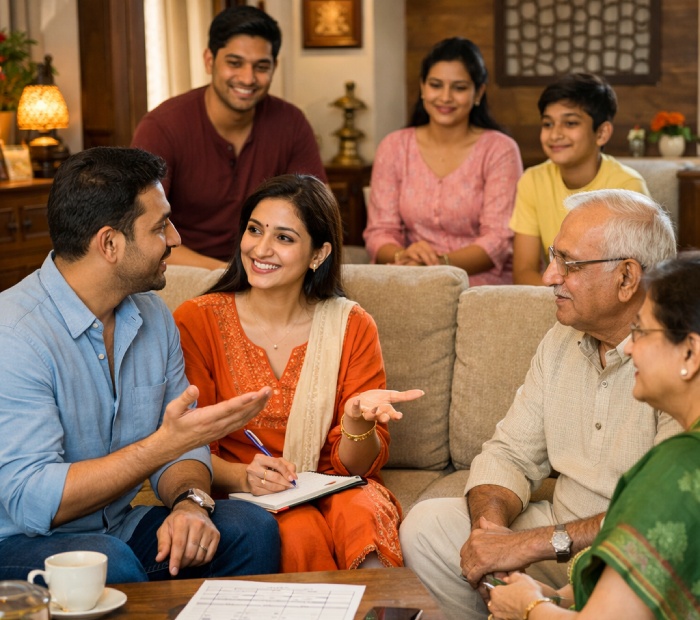
Communication is going to be key in everything in life. Successful marriage, job, and everything. So c communication in a joint family marriage must remain transparent, empathetic, and constructive. Couples should share thoughts and feelings with each other and the extended family openly. Everyone else around should listen without judgment. Misunderstandings often rise when assumptions replace dialogue.
Make sure you express appreciation, discuss expectations, and participate in decision-making collectively. You need to understand that every opinion matters, even if it contrasts with your own. Listening fosters mutual respect and encourages collaboration rather than confrontation.
6. Celebrate achievements
Acknowledging success strengthens relationships within a joint family marriage. Celebrate all milestones like your own. Graduations, promotions, anniversaries, or personal victories.
Applause and encouragement make individuals feel valued and deepen emotional bonds.
Joint celebrations also reinforce a sense of unity. Organise small gatherings or family dinners to honour each accomplishment. These moments allow you as a couple to participate fully, sharing joy while remaining connected to the larger family fabric.
7. Spend quality time
Living together doesn’t automatically guarantee bonding. Couples must be able prioritise quality time amidst routines and responsibilities. Plan activities that involve both the partner and the extended family to create shared memories. At the same time, carve out private time. Even some of the shortest moments like a morning coffee together or an evening walk around the neighbourhood offer opportunities to reconnect. Quality time nurtures emotional well-being and ensures that the couple doesn’t get lost in the larger household’s daily bustle.
8. Keep love alive through small gestures
Ask any lover. Romance thrives in attention to detail. Remember birthdays, small preferences, or favourite meals. Helping your partner without prompting is a way to show that you care. Acts of service, though seemingly minor, communicate affection more profoundly than grand gestures.
Joint families can inadvertently divert energy and attention. Prioritising moments of connection maintains intimacy. These small gestures form the bedrock of a resilient, loving partnership.
9. Embrace empathy and flexibility
Every joint family contains diverse personalities and generational perspectives. Couples must be able to navigate these differences with empathy and flexibility. Recognize that conflict often arises from misunderstanding rather than malice. Responding with patience and understanding transforms tension into massive learning opportunities.
But flexibility is not equal to compromising your values. It means finding solutions that respect everyone’s needs while preserving the couple’s autonomy. Adaptable partners cultivate harmony, making shared living a positive experience and not a friction source.
10. Avoid gossip and negative talk
Trust is the foundation of any relationship. In a joint family marriage, refrain from talking negatively about your partner or sharing private matters with others in the family. Gossip is devastating at eroding trust and ends up breeding resentment, making things spiral into long-term conflicts. Protect the sacred space of your marriage by keeping disagreements private and approaching conflicts constructively.
11. Practice gratitude
Gratitude transforms perspective. Understand that support, love, and effort are something that every member of the family needs to contribute. Thank your partner for their presence, your parents for their guidance, and siblings for their companionship.
Appreciation fosters warmth, reduces tension, and cultivates an atmosphere of mutual respect.
12. Learn from each generation
One of the most rewarding aspects of a joint family marriage is access to wisdom from multiple generations. Observe habits and problem-solving strategies of elders. Adopt practices that resonate and respectfully set aside those that don’t.
Learning from different generations will enrich your daily life. Couples can integrate these lessons into their routines, parenting approaches, and conflict resolution methods. This cross-generational learning strengthens both the couple and the family as a whole.
13. Create your own traditions
Family customs are there to provide structure, you as a couple, can benefit from creating personal traditions within the joint daily framework. Whether it is a weekly movie night, a monthly dinner out, or a shared hobby, these rituals nurture your bond and carve out a distinct space for your relationship.
Personal traditions allow couples to maintain individuality and celebrate their identity within the shared, larger household. These rituals become anchors and help you navigate busy or stressful days.
14. Reflect on the joint family marriage pros and cons
Living in a joint family comes with distinct advantages. Shared responsibilities, emotional support, financial security, and opportunities for deeper connections. Challenges include limited privacy, potential conflicts, and the need to navigate multiple opinions. Couples who understand both sides can anticipate challenges and leverage the benefits effectively.
Acknowledging pros and cons openly prevents unrealistic expectations. It allows couples to strategize solutions, balance duties, and celebrate shared joys without resentment.
15. Follow joint family marriage rules
Every family has its very own set of informal, unwritten rules. Respecting these guidelines fosters harmony and prevents friction. Learn the rhythms, expectations, and boundaries that shape family life. These rules may involve daily routines, financial practices, or even lending a helping hand in chores. Following these demonstrates respect and the willingness to integrate.
At the same time, couples should advocate for adjustments that ensure fairness, privacy, and emotional well-being.
Concluding thoughts
A joint family marriage can be the source of immense joy and an opportunity for learning and support. Couples who actively work towards collective goals and achievements can thrive even in the most complex household structures. Recognise the unique opportunities and challenges, and approach them with empathy, patience, and most importantly, intentionality.
Boundaries, gratitude, and open communication form the pillar of peace and a happy joint family. When approached mindfully, living in a joint family after marriage transforms from being a test of patience into a fulfilling journey of togetherness, love, and shared growth.