
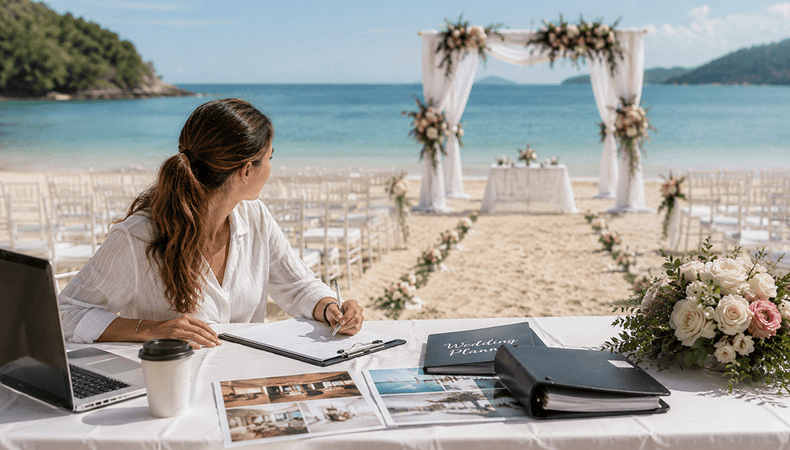
Dream of planning weddings on beaches, in vineyards or amid mountain views? Becoming a destination wedding planner takes more than passion. It demands skill, patience and genuine industry knowledge.
Understand What a Destination Wedding Planner Really Does
Many people think handling a destination wedding means just finding… pretty places. Really, destinations are huge logistical headaches with minutes and minutes of problem solving.
➩ Key Duties of the Destination Wedding Planner
A destination wedding planner has to do a lot of things at the same time, such as:
- Plan travel and manage logistics for out-of-town guests
- Handle venue contracts and local paperwork
- Arrange supplies and vendors in unfamiliar locales
- Plan from a distance across multiple time zones
➩ What Makes Destination Wedding Planning Different from Local Wedding Planning?
Destination planners usually guide couples in navigating laws, customs, and local intricacies. That faces away from traditional wedding planners.
For local weddings, most details can be handled face-to-face, but planning for destinations happens in real time across several time zones simultaneously. Your venue may be visited only once or twice before the actual wedding day.
Destination planners have to balance creative vision with strong planning skills. Every call must have another backup call of the same – or different – sort. You never know when a local law, weather, or vendor is going to call into question your original plan.
The biggest challenge in destination wedding planning is likely juggling multiple weddings at the same time and managing the time restrictions that come with handling weddings in different countries. A single misstep could simultaneously destroy travel plans, vendor timing and guest enjoyment.
Knowing this from the start helps new planners manage their expectations. It also fosters authentic respect for the expertise needed to fully engage with the profession.
Build Deep Knowledge of Popular Wedding Destinations
Have you ever wondered why some planners always seem to have that one in mind for an instant? It’s because of the deep knowledge of destinations. And clients can tell right away.
➩ What Strong Destination Knowledge Involves
- Temperature and peak sizing in various locations
- Cultural factors influencing the type of ceremony
- Visiting locations personally builds credibility
- The local marriage licence details and residency laws
➩ Why Specialising Pays Off
You don’t have to become an expert in every popular location on the planet. Instead, niche to your expertise in a handful of locations and be better positioned to negotiate better rates and foster stronger relationships.
Visiting destinations personally builds credibility enormously. Planners who walk the rooms and meet the décor on-site can provide far more credibility, detail, and nuance than merely using the photos provided by a supplier.
A quick checklist:
- Research the seasonal weather patterns
- Understand the local marriage documentation
- Locate various venues outside of the typical tourist regions
- Reach out to local tourism boards for early notice
- Build a strong foundation for confident and informed conversations with clients.
Gain Practical Experience Before Working Independently
Want to go straight into solo planning, having never attended a course? Most experienced planners advise against this, because experience is what teaches all of the lessons that your course simply cannot.
➩ Ways to Build Real World Experience
- Collaborate with an experienced wedding planner
- Do internships or assistant gigs in event companies
- Organise local weddings before working in destination events
- Volunteer for friends and family weddings to make use of the pressure-free environment
➩ Why Patience Matters Here
Going straight into destination wedding planning can be an expensive mistake. Every wedding, no matter how small, offers valuable insights at how to coordinate; these are lessons that can be invaluable in helping you.
A lot of planners start by organising local weddings before moving into destination events. Not only is this a way of gaining a client base, but what that work offers in helping to sharpen up your organisational skills at the same time.
You can gain confidence quickly just by watching how experienced ones tackle last minute problems. The lessons we learn this way is something that purely academic lessons cannot generally cover.
Build Strong Vendor Relationships Across Locations
Who runs a smooth-running destination wedding? Ultimately, it’s the vendors, and forging relationships with reliable ones is crucial.
➩ Vendors Worth Prioritising
- Photographers and videographers
- Caterers and decorators
- Transport and accommodation providers
- Local officiants and entertainment suppliers
Keeping These Relationships
Establishing new professional relationships takes time, communication and mutual respect. However, repeatedly engaging the same vendors enables planners to secure priority availability for peak season bookings and negotiate favorable rates and credits.
Moreover, having reliable vendors to meet in person, whenever possible, solidifies existing relationships. For this reason, consider creating a trusted vendor indexed by location and type of service to save time on multiple weddings.
Reliable local vendors can also help planners navigate regional customs, preferred materials, and any logistical concerns. Their knowledge and experience abroad is sensitive-carrot for planners bound for less familiar destinations on a regular basis.
It expresses itself as a planner’s most valuable professional asset, underpinning client satisfaction, on-site scheduling and the overall success of the wedding.
Sharpen Your Budgeting and Negotiation Skills
Think destination weddings only require creative vision rather than financial skill? Budgeting mistakes can quickly turn a dream wedding into a stressful, costly experience.
➩ Areas That Need Careful Costing
- Venue hire and travel expenses
- Permits and legal documentation fees
- Vendor services across multiple categories
- Currency fluctuations and hidden local charges
Read Also: 51 Creative Pose Ideas for Destination Wedding Photography
➩ Building Financial Confidence
Strong negotiation skills help planners secure fair pricing without compromising quality. Transparent communication with couples regarding costs prevents misunderstandings later.
Practical steps worth adopting:
- Create detailed spreadsheets tracking every expense category
- Set aside a contingency fund for unexpected costs
- Explain budget breakdowns clearly rather than vague estimates
Financial confidence builds trust with clients quickly and protects your professional reputation. Couples remember planners who kept costs predictable far more than those who caused financial stress.
Master Communication and Client Coordination
Struggling to imagine coordinating a wedding across different countries and time zones? Strong communication skills make this task considerably more manageable for planners.
➩ Tools and Habits That Help
- Regular video calls with couples
- Detailed emails summarising decisions
- Shared planning documents and checklists
- Clear timelines for vendors and clients alike
➩ Why Clarity Matters More Here
Planners must also coordinate effectively with vendors who may speak different languages. Setting realistic expectations early prevents disappointment later, since couples appreciate honesty about limitations and challenges.
Active listening matters just as much as clear speaking during client meetings. Understanding unspoken concerns often prevents misunderstandings before they escalate.
Regular video calls, detailed emails and organised planning documents keep couples informed throughout the process. This becomes especially important when couples cannot visit the venue in person before their wedding.
Read Also: How AI Can Make Your Wedding Planning Simple and Enjoyable
Create a Strong Portfolio and Online Presence
Wondering how couples actually find destination wedding planners today? A strong portfolio and online presence often make the first, lasting impression.
➩ Elements of a Strong Portfolio
- High quality photographs from past weddings
- A professional website with clear service details
- Genuine testimonials from previous clients
- Consistent, engaging social media content
➩ Growing Your Visibility
Consider collaborating with photographers to exchange promotional content from real weddings. This partnership benefits both parties while expanding professional visibility significantly.
Updating your portfolio regularly with recent weddings keeps it feeling fresh and relevant. Outdated examples can unintentionally suggest limited recent experience.
High quality photographs showcasing past weddings demonstrate creativity and professionalism instantly. Couples want visual proof of a planner’s style before committing to any booking.
Market Yourself and Keep Growing Your Skills
Curious how established planners consistently attract new clients year after year? Strategic marketing combined with continuous learning keeps their businesses thriving steadily.
➩ Ways to Attract New Clients
- Network with travel agencies, resorts and luxury hotels
- Attend wedding industry events and workshops
- Encourage referrals through consistently excellent service
- Invest in certifications that strengthen credibility
➩ Staying Relevant Long Term
Building a genuine personal brand also helps planners stand apart within a crowded market. Authenticity often resonates more than polished marketing alone.
Growth in this industry never truly stops. Successful planners remain curious, adaptable and genuinely passionate about their craft.
Attending wedding industry events keeps planners updated on new destinations, sustainable practices and evolving client preferences. Offering exceptional service consistently often generates organic referrals through word of mouth alone.
Final Thoughts
Becoming a successful destination wedding planner requires dedication, patience and continuous skill development. Every challenge encountered along the way builds valuable professional experience.
Focus on building genuine relationships, strong organisational habits and clear communication throughout your career. These fundamentals create a foundation for lasting success within this rewarding industry.