
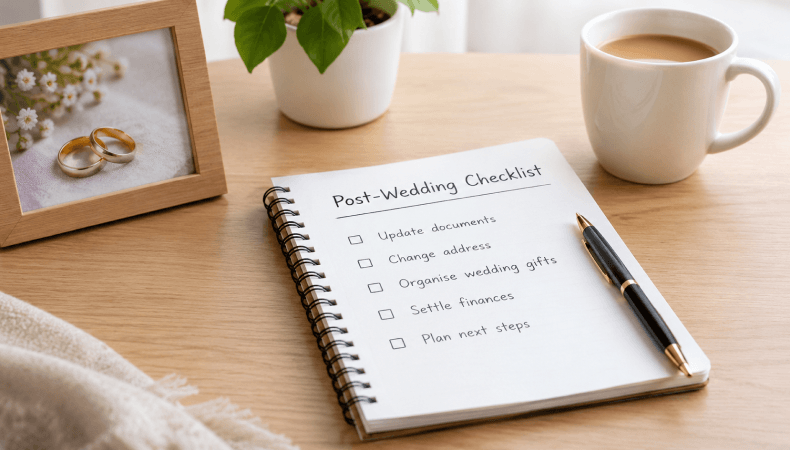
The ceremony has ended, the guests have left, and the music has been turned off. It’s time for the things that no one wants to see photos of: getting things in order, making decisions and moving into your new life. Marriage involves a lot of work, from registering, changing names to financial planning.
Below is a list of steps to make the process easier for you.
1. Rest and Reconnect First
Before you start filling out any forms or visiting banks, take some time to relax. Getting married is a very tiring experience, both emotionally and physically. If possible, go on a honeymoon or even a staycation. Discuss how you feel about the wedding, its significance for you and your expectations from the future life.
2. Register Your Marriage
In India, a mere conduct of the marriage ceremony will not provide you with a marital certificate. There is a need to register your marriage under:
- Hindu Marriage Act, 1955 for Hindus, Buddhists, Jains and Sikhs.
- Special Marriage Act, 1954 for Inter-faith marriages or those who opt for civil marriage.
- Personal Laws/State laws for others including Muslim and Christian marriages.
This registration normally occurs in the office of sub-registrar or marriage registrar. The necessary documents depend on state; however, common requirements include:
- Proof of age and address of both the parties
- Passport size photograph
- Wedding invitation card or pictures from the wedding
- Affidavits/Declarations as may be required
- Witnesses, typically two or three.
Online registration facility is now provided by most of the states which saves time. Visit your state’s portal for details.
3. Get Multiple Copies of the Marriage Certificate
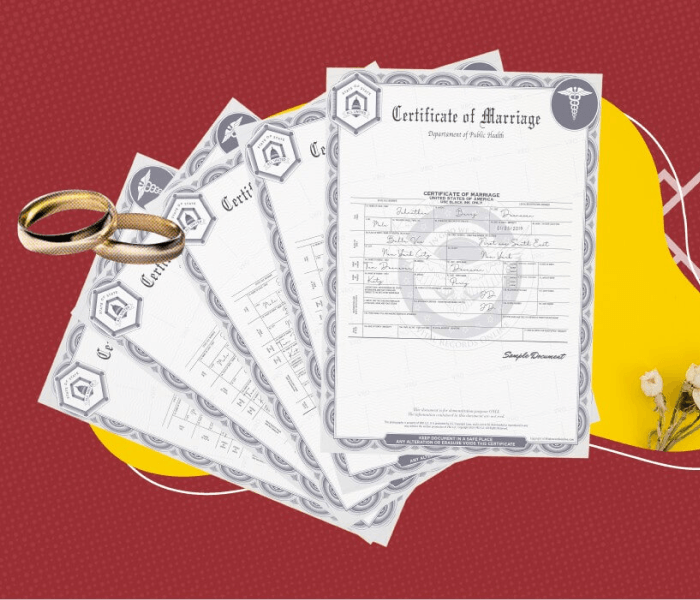
Marriage certificate is the master document for all kinds of changes to come up. Obtain five to ten certified copies for the following purposes:
- Banks
- Passports
- Insurance companies
- Employers
- Visas
- Government authorities
Keep a digital copy as well in cloud storage.
4. Update Your Name and Personal Documents (If Applicable)
It is up to an individual to change his name after marriage, and many choose not to do so. However, should you want to change yours, ensure that you do it in an organized manner:
- Gazette notification/affidavit. This will be the first step towards changing your name in most cases, either by issuing a notification in the Gazette/newspapers, depending on what procedure exists in your state.
- Aadhaar. Change your name and address through the UIDAI website or enrollment centre.
- PAN card. Apply for rectification through NSDL/UTIITSL website.
- Passport. Make a reissue application along with your marriage certificate.
- Driving license and voter ID. These have to be changed at the RTO and elections office respectively.
- Bank accounts, insurance, investments. Each institution has to be informed with respect to changes in identification proof.
Regardless of whether you choose to retain the same last name or not, chances are high that you will have to change the address/marital status in many places.
5. Update Your Address Everywhere
Should you move or if either partner moves, make sure that you change the addresses at the following places:
- Aadhaar, PAN, voter ID and driving licence
- Bank accounts, credit cards and loan accounts
- Insurance policies
- Employer records and PF account
- Gas connection, electricity and water bills
- Subscriptions, online shopping accounts and delivery apps
Make a spreadsheet and tick each item off as you go. It’s the easiest way to make sure nothing slips through.
6. Sort Out Your Finances Together

Money happens to be one of the primary sources of stress for marriages; discussing money from the start saves future headaches. Arrange an evening to discuss:
- Full disclosure: talk about your sources of income, investments, debts, EMIs, savings and money owed to your family or any other member. This keeps surprises away in the future.
- Decide how to manage your finances. Some couples go for a joint account and some go for a separate account with some amount of money going into a common account for running household expenses.
- Open a joint account, if that is your decision. This will help you to easily pay your rent and utility bills, grocery bills, etc.
- Create a budget. Write down your monthly income and expenditure, the goals for your savings and expenditure limits. Make a revision of your budget every few months.
- Create an emergency fund. Have three to six months worth of living expenses easily accessible to you.
- Set long-term goals. These can be having a child, buying a home, traveling, early retirement or whatever you want together.
7. Update Nominees on Bank Accounts and Investments
It’s a simple but very crucial step that often tends to slip through the mind. After marriage, update nominees in terms of:
- Savings and Fixed Deposits
- Mutual Funds and Demat Accounts
- PF, PPF and NPS
- Life Insurance & Health Insurance Policies
- Post Office Plans
Generally, people nominate their parents prior to marriage. In case you wish to have your spouse nominated instead, then update the form(s) and collect proof of the same.
8. Review Insurance Coverage
There’s no better time than marriage when one can look into insurance needs:
- Health Insurance: Nominate your spouse to become part of family floater plans. Alternatively, request your employer to add them under your existing family group scheme. Most often there is a specified deadline for doing this.
- Life Insurance: Review life insurance if you or your spouse are financially dependent on each other. A term plan will always be the economical solution in such a situation.
- Home and vehicle insurance: Update names, addresses and nominees where relevant.
Read Also: Different Types of Marriages: Which Type of Your Marriage?
9. Inform Your Employer and HR
Tell HR about your marriage so you can update your records. Depending on your company, this may let you:
- Add your spouse as a dependant for insurance
- Claim marriage leave
- Update emergency contacts and nominee details
- Change your name in official records
Keep a copy of your marriage certificate handy, since HR will ask for it.
10. Handle Tax Planning

Marriage affects how you plan taxes. Things to review:
- Declarations. Update your marital status in your tax records and investment declarations.
- Deductions. Check which deductions apply, such as those for health insurance premiums for your spouse or home loan interest.
- Gifts. Gifts received at the time of marriage are generally exempt from tax, but gifts from your spouse and certain relatives also have specific rules. Keep a record of significant gifts and who gave them.
- Joint home loans. If you plan to buy a house, a joint loan can help with eligibility and tax benefits.
A short session with a chartered accountant can save you money and confusion.
11. Plan Your Spouse’s Visa or Relocation (If Needed)
If one of you lives or works abroad or plans to relocate, begin preparations early enough since you need spouse visas, which usually require marriage certificates, proof of relationships, financial stability, and even interviews. Processing can take some time, therefore, start as early as possible and organize documents.
12. Write Thank-You Notes and Return Favours

Take time to show gratitude to everyone who participated in making the wedding memorable and fun. You should write down thank-you letters, send out emails or gift cards and organize a small present as a token of your appreciation to relatives, friends and vendors. In case you receive money or other gifts from these people, record it down because it will help you to return favours during weddings of these individuals in the future.
13. Organize Your Wedding Photos
Don’t just put your wedding pictures and video footage into computer folders, but back them up on the cloud and hard drives. Choose some of the best and put them into your photo albums. Inform a photographer or videographer about the delivery date of your photos/videos and review your contact with them. Don’t forget to clean, preserve or dispose
14. Settle Into Your Shared Home
Whether you’re moving into a new house or one partner is joining the other, spend time making the space feel like yours:
- Decide who handles which chores, or rotate them
- Declutter and make room for your partner’s belongings
- Set up household routines, such as grocery shopping, bill payments and cooking
- Add personal touches like photos, plants and decor that represent both of you
Talk about expectations openly. Small conversations early on prevent bigger arguments later.
15. Build Healthy Habits as a Couple

The best marriages are built on daily habits more than grand gestures:
- Communicate regularly. Set time aside each week to talk about how things are going.
- Respect each other’s space. Togetherness is lovely, but so is time with friends and hobbies.
- Handle disagreements kindly. Argue about the issue, not the person, and apologise when you’re wrong.
- Make time for fun. Date nights, weekend trips and shared hobbies keep the spark alive.
- Take care of your health. Consider a pre-parenthood health check-up if you plan to have children, and talk to a doctor about any questions you have.
Read Also: Court Marriage Vs. Traditional Marriage Legal Differences
16. Navigate Family Relationships With Care
Marriage not only unites you and another person, but two families as well. It is possible that you are now having to adapt to in-laws, different traditions, and a whole host of new experiences. Be patient, learn as much as you can and express gratitude, but also draw lines and stand as one.
Quick Post-Wedding Checklist Summary
- Rest and spend quality time with each other
- Get yourself registered
- Make sure to get multiple copies of the certificate
- Make changes in names and identification papers (if required)
- Make changes in your addresses everywhere
- Talk about your financial status and plans ahead
- Nominees
- Insurance papers
- Let your employer know
- Tax planning
- Visa/ Relocation planning if required
- Thank-you letters
- Store your wedding memory files
- Adjust to your new home
- Developing good habits
- Building family relations
Final Thoughts
The weeks following a wedding may be busy, full of forms and decisions, but with every task that gets ticked off, you are getting closer to creating an organized and hassle-free life for yourselves. Take things one step at a time, split the duties and give yourselves some leeway.
Congratulations on your marriage and a happy beginning.
Related Posts