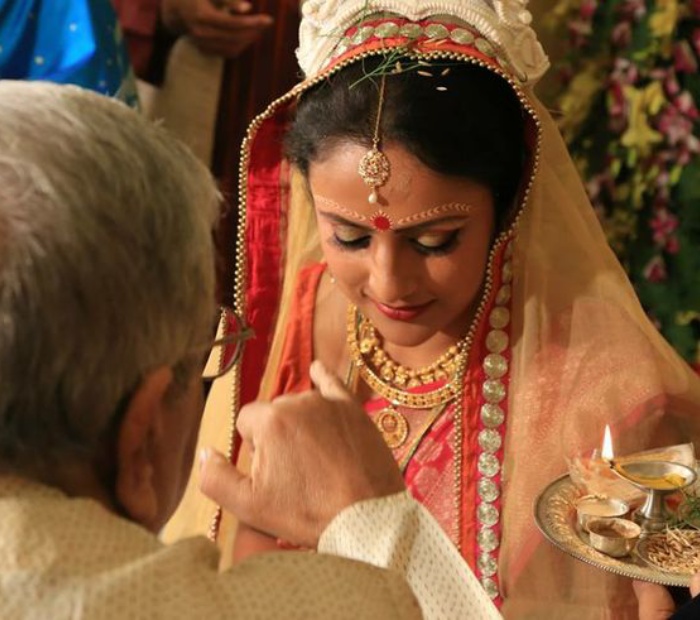
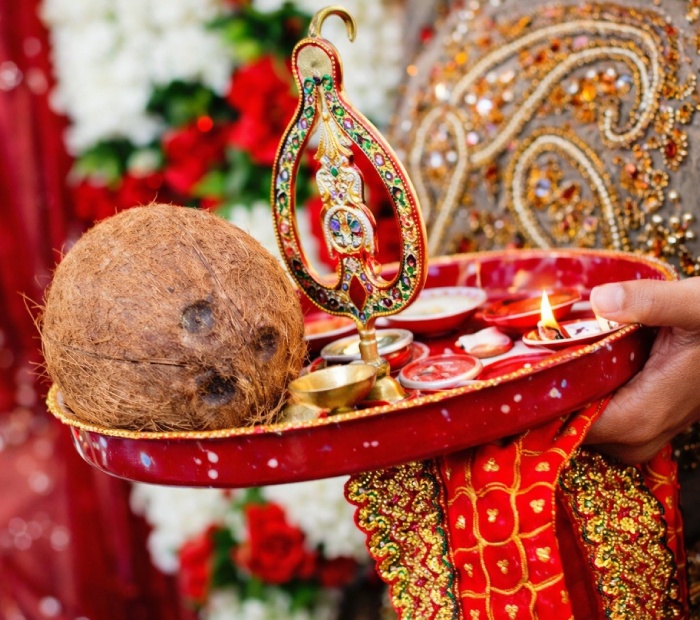
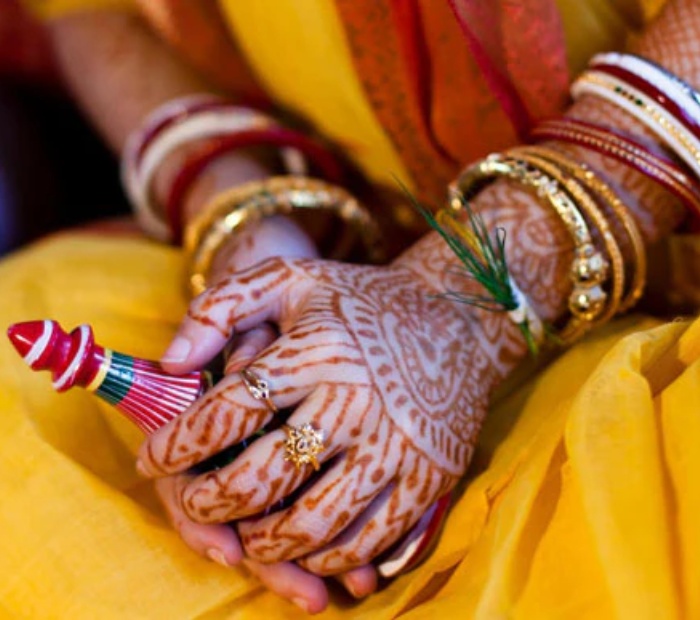
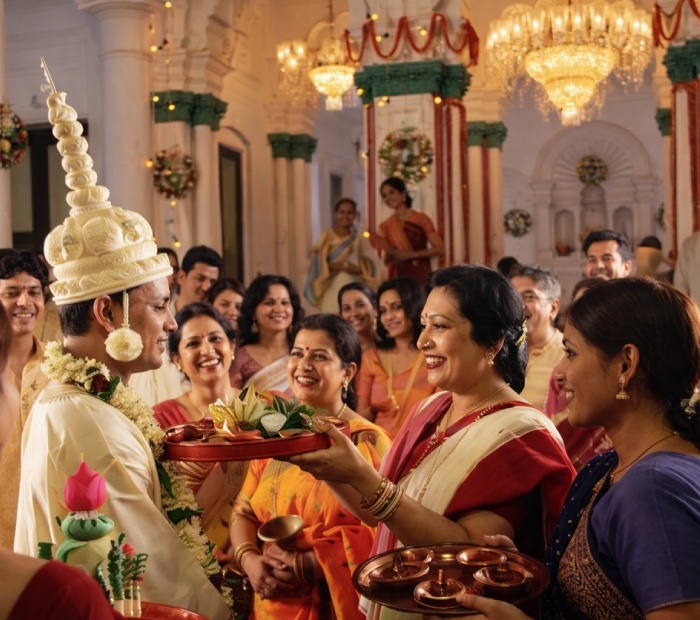
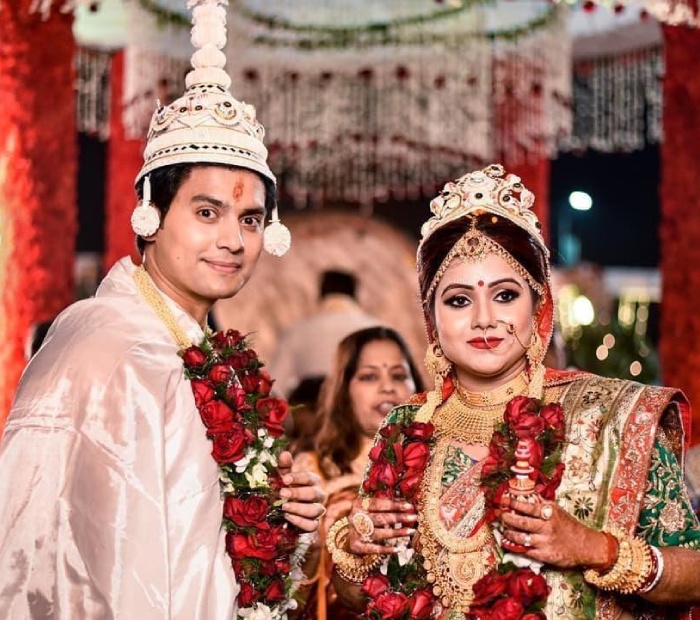
Bengal as we all know is famous for food, rituals, festivals, vibrant culture and amazing mishti doi. But there is one more thing that makes this vibrant state truly unforgettable – and that’s their wedding traditions and rituals. Bengali weddings, often referred to as Biye or Biyer Anusthan, are very vibrant celebrations known across the world. These weddings perfectly blend rich culture, vibrant colors, intricate rituals and soulful ceremonies. Everything, from pre-wedding customers to the bidayi (final farewell) are worth experiencing in Bengali marriages.
If you want to know more about Bengali wedding traditions and rituals, then read this post to discover the depth and charm of Bengali weddings in detail. So, without any further ado, let’s get started…
Bengali Wedding Rituals & Traditions in Detail
Bengali weddings are full of customs, traditions, colors and unlimited food. These elaborate celebrations include, pre-wedding rituals, main wedding customs and post-wedding traditions. Here, we have explained each part in detail for your ease and understanding. Take a look…
I. Pre-Wedding Rituals
Bengali weddings involve several pre-wedding customs in which the families and the couple are prepared for the celebration. Each ritual plays a crucial role and is considered crucial in Bengali wedding ceremony.
1. Ashirvad
The whole celebration of Bengali wedding begins with Ashirvad (blessings from elders). In this, the families exchange visits and seek blessings from elders before the wedding. This step is believed to be most important and is said to bring prosperity and happiness to the couple.
2. Paka Dekha
Paka Dekha, popularly known as Pati Potro, is yet another significant pre-wedding ritual in Bengal, India. In this, both the bride’s and groom’s families meet before the wedding where in they confirm the alliance and discuss wedding arrangements, dowry and festivities to set the tone for the upcoming celebrations.
3. Aiburo Bhaat
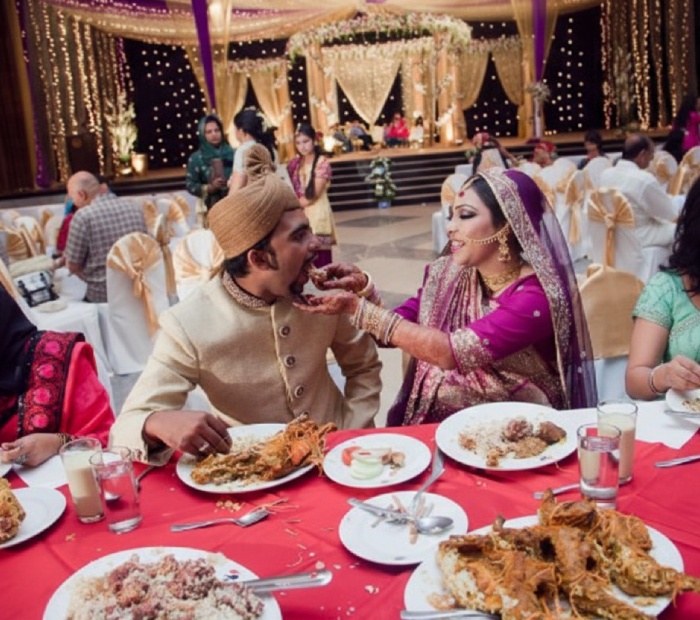
Image Source: mangalparinay.com
Aiburo Bhaat is similar to bachelor’s party, often known as the last meal of the bride and groom as unmarried individuals. Families organize a grand feast for the bride and groom wherein they are served with love and care. This ritual symbolizes letting go of bachelorhood and getting ready for the new journey of life.
4. Gaye Holud
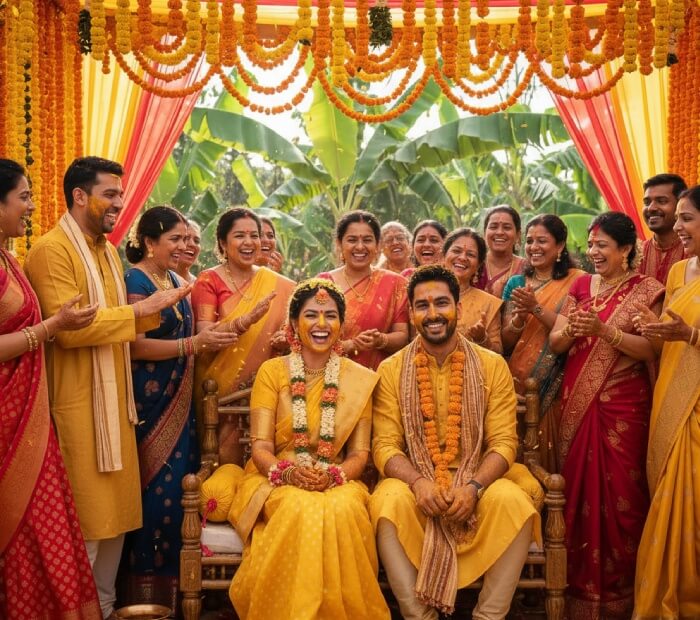
Gaye Holud, popular as Haldi ceremony is a colorful ritual. In this, turmeric paste is applied to the bride and groom’s face and body for skin purification, blessings and glow before the wedding (mostly performed on the day of the wedding). This ritual often includes singing traditional songs and celebrating with dance and music. People often wear yellow attires in Gaye Holud. The whole atmosphere looks enchanting and festive.
5. Sankha Pola
Sankha Pola is the last pre-wedding ritual in Bengali weddings. In this, the bride is made to wear popular white and red bangles made of conch shells. The combination of white shakha and red pola bangles is a quintessential symbol of a married woman in Bengali culture.
II. WEDDING DAY RITUALS
After pre-wedding rituals are completed, preparations for the main wedding starts. A series of intricate ceremonies take place during main wedding rituals. Main wedding rituals mainly involve the closest family members of both sides, couple and the priest. Wedding day rituals often span several hours and are deeply symbolic.
6. Bor Jatri and Bor Boron
Main wedding begins with Bor Jatri (the groom’s procession) and Bor Boron (welcoming the groom). The groom arrives at the wedding venue on a luxury car or horse, accompanied by family members and friends. Bor Boron is accompanied by traditional Bengali music and drummers. Once the groom reaches the venue, the bride’s family formally welcomes him by sprinkling betel leaves and rice on his forehead as a mark of respect and hospitality.
7. Subho Drishti
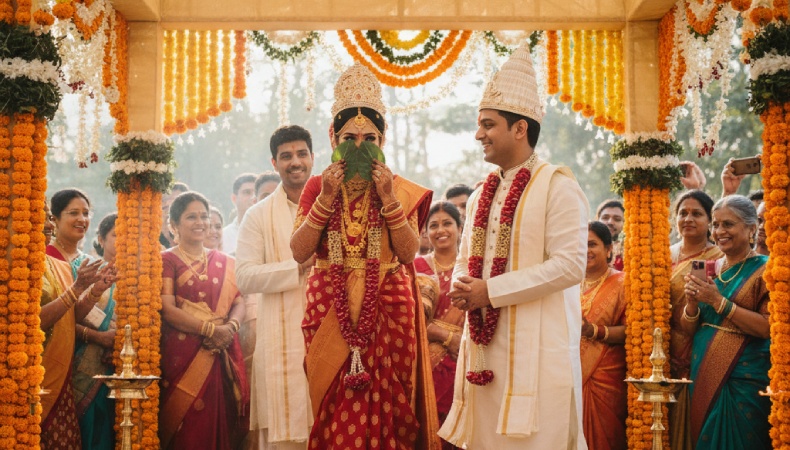
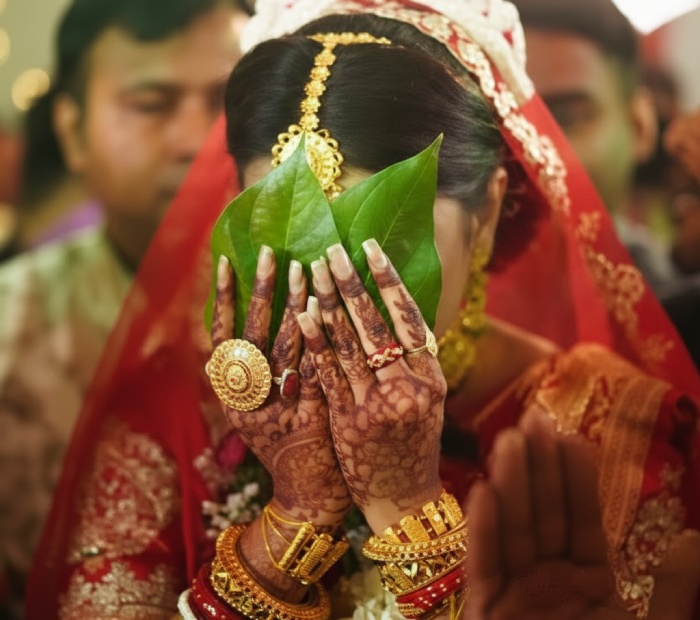
After groom’s arrival, bride enters the venue. Brides in Bangali weddings enter on a wooden stool called “pidi.” This stool is carried by 4 males (preferably brothers) from all four sides. The bride makes her entrance with her face gently covered by betel leaves, which she holds in her hands. When she finally looks at the groom, their eyes meet in a sacred moment accompanied by the sound of conch shells, called Shubho Drishti.
8. Mala Bodol
Image Source: laixcm.shop
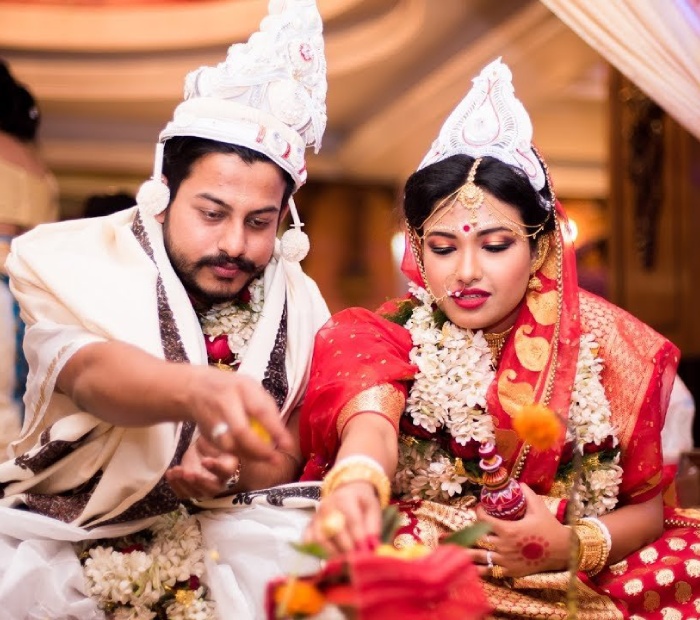
Mala Bodol or Mala Badal is the exchange of flower garlands between the bride and groom. This symbolizes their acceptance of each other. The moment is often filled with playful teasing and fun rituals, bringing a cheerful and lively atmosphere to the ceremony.
9. Samprodaan
Samprodaan in Bengali wedding is similar to kanywadaan in North Indian regions. In this, bride’s parents or the elder member of the bride’s family performs the ritual. In this ritual, the bride’s family ceremoniously entrusts her to the groom.
10. Yagna
Image Source: getethnic.com
Yagna, also known as Yajna is one of the most important rituals in Bengali wedding. In this, the bride and groom are seated before the sacred fire (Agni) with a priest chanting Vedic mantra, while offering ghee and rice to the fire. This ritual is to formally sanction their marriage.
11. Saptapadi
Image Source: memoriesdesigner.in
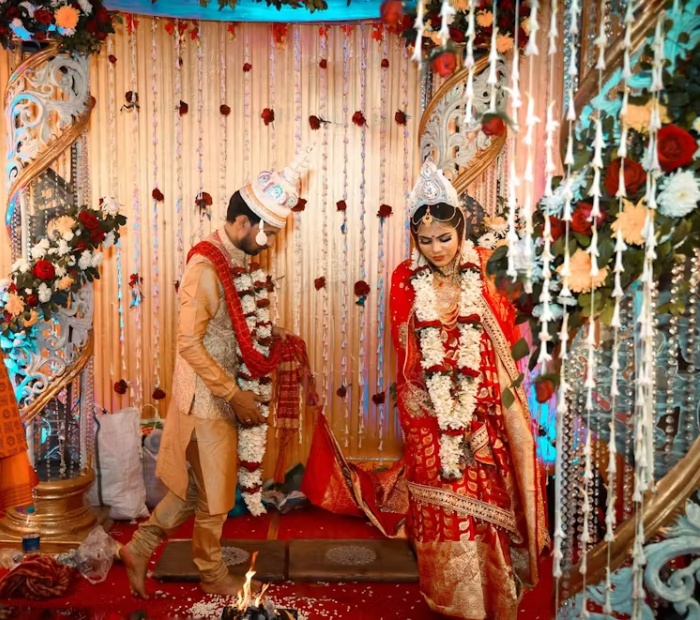
Saptapadi, also known as saat pheras or seven vows, is again an important step in Bengali wedding. In this ritual couple take seven vows while taking seven rounds around the sacred fire together. The seven vows symbolize their union, lifelong commitment to each other with the fire burning away impurities and sanctifying their promises.
Saptapadi is followed by Anjali, also known as Kusumdinge or Lalanjali. In this, the bride’s brother helps the couple with puffed rice to offer into the holy fire, while groom holding the back of the bride’s hand so that they can offer puffed rice into the holy fire together. This ritual marks the official beginning of their journey together as a married couple.
13. Sindoor Daan
Image Source: memoriesdesigner.in
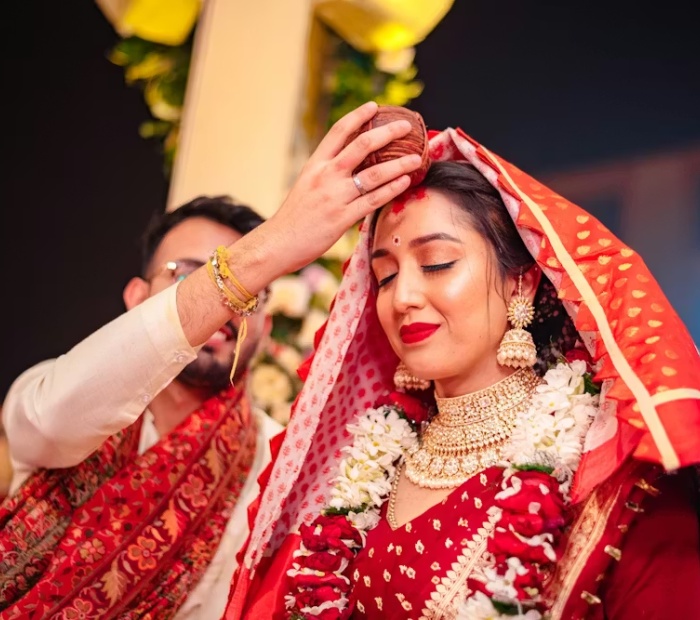
Sindoor Daan is followed by Anjali ceremony. In this the groom applied sindoor or vermilion to the bride’s hair parting using a ring or mirror. This ritual is one of the most iconic aspects of Bengali weddings, symbolizing bride’s marital status as a married woman. This ritual is often accompanied by blessings and the recitation of sacred mantras.
14. Bidayi
Bidayi is the last ritual of the Bengali main wedding ceremony. No matter which state or culture, Bidayi is a deeply emotional moment. In this ritual, the bride leaves her parents’ home to join her husband’s family. This ritual is often accompanied by blessings, tears and meaningful customs, such as tossing rice over her shoulder to ensure her family lives prosperous life even after she leaves their home to embark on her new journey and join her husband’s family.
III. POST-WEDDING RITUALS
Once the bride reaches to her husband’s home, several other series of rituals are performed as part of Bengali wedding traditions. These post-wedding rituals mainly focus on the bride’s integration into her new family and the couple’s first moments together.
15. Badhu Boron
Image Source: perkypinkwanders.com
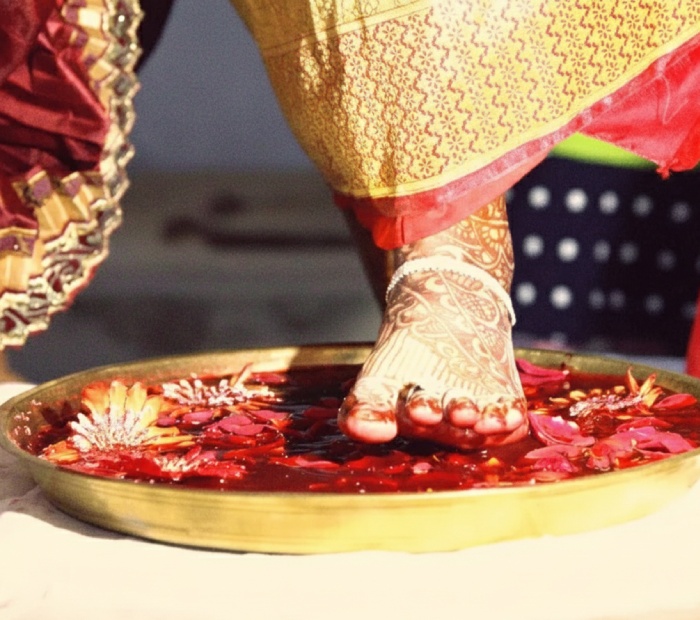
Badhu Boron, also known as Bou Boron, is one of the most significant rituals in Bengali weddings in which the groom’s family formally welcomes the newly married bride (the bodhu) into her new home. The bride is first asked to gently kick the pot filled with rice placed at the main entrance to spill the rice.
Then, she is asked to dip her feet in alta (red dye) kept in a large, shallow metal plate (parat) so as to create red footprints. Badho Boron ritual symbolizes her arrival as a bearer of prosperity and good fortune for the family and household.
After the wedding, relatives of groom perform Mooh Dikhai ceremony at the home. This is typically done to introduce the bride to all her extended family members and relatives. This is the time when relatives and extended family members shower her with gifts and blessings. This ritual is done to strengthen familial bonds.
17. Kalratri
Kalratri or Niki Biye is yet another significant and traditional part of Bengali weddings. Kalratri or Niki Biye is a night ceremony that occurs after the wedding. In this ritual, the bride and groom are kept separate for spiritual preparation and introspection. As per tradition, lamps are lit and mantras are chanted to keep negative energies away and bless the newlyweds with happiness and prosperity.
18.Bou Bhat
Image Source: tanziaahamed2014.weebly.com
The Bou Bhat, formally known as the bride’s reception, is one of the significant traditions in Bengali weddings. In this ritual, the brides are formally introduced to the groom’s extended family members, neighbourhood and community. This ceremony typically occurs the day after the main wedding ceremony.
It is often accompanied by a grand feast where groom’s relatives, friends and neighbours welcome the bride with gifts, blessings and ceremonial offerings. Bengali brides are often seen donning red Banarasi saree along with gold jewelry on their Bou Bhat ceremony.
19. Phool Sajja
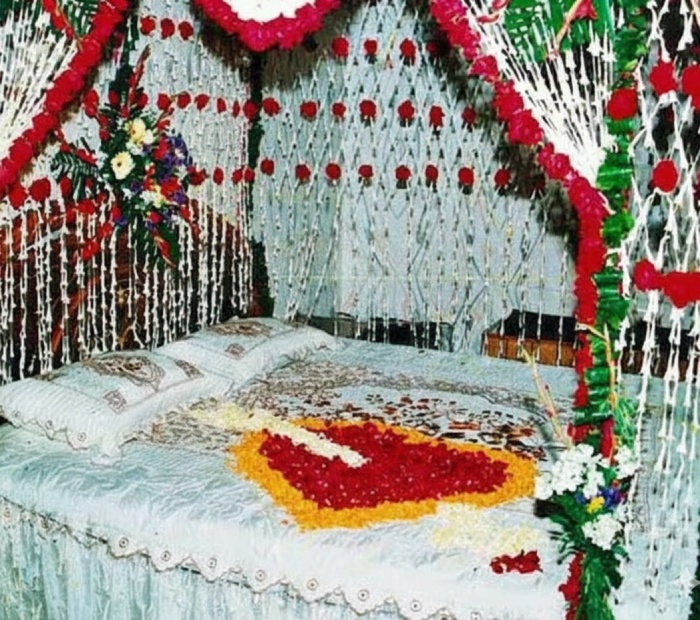
Image Source: birdlenscreation.com
Lastly, Phool Sajja takes place. Phool Sajja, as the name says is the process of decorating the couple’s room with different kinds of beautiful flowers. This is traditionally the first night the couple spends together as husband and wife. This ritual is said to bring beauty, purity and positivity in the newly wedding couple’s life. Groom’s family members gather to create an auspicious environment for the couple’s first night and make it memorable.
The Bottom Line
So, this is all about the Bengali wedding traditions and rituals. Hopefully, this article has been informative for you and helped you have a clear understanding of Bengali wedding ceremonies. Bengali weddings are no ordinary celebrations – they are the events to remember. They perfectly blend family values, cultural heritage and vibrant culture. Rich in symbolism, these weddings carry deeper meaning. Additionally, the vibrant colors, traditional Bengali music, elaborate feasts and intricate customs make the event even more memorable for all, including non-Bengali wedding guests.
Each ritual, from Ashirvad to Biday and Bau Bhat add the depth and warmth to the celebration. Where other cultures are choosing to opt for more urban-style weddings, Bengali couples are still continuing to stick to the trend and demonstrate how rituals and celebrations intertwine, while creating long lasting memories.