For many couples, marriage represents both a union established by contract (e.g., laws that govern civil marriages) and a union formed through spiritual means (i.e., agreeing to enter into the covenant of marriage). Certain couples may wish to marry in a civil ceremony or outside their faith (i.e., non-religious) but feel compelled at a later date to validate their marriage with a religious authority. This need is fulfilled through a convalidation ceremony.
A convalidation ceremony allows couples to have their marriages declared valid by a particular faith group, specifically the Roman Catholic Church. In addition to providing religious validation of their marriage, convalidation ceremonies give couples spiritual value and provide the couple with an official declaration of recognition by their respective religions.
Convalidation ceremonies are not simply ceremonial, rather, they represent a significant milestone in establishing a long-term commitment to each other, to their respective faiths and to the institution of marriage.
What Is a Convalidation Ceremony?
A convalidation ceremony is a ceremony conducted by the Catholic Church that makes an existing non-religious or civil marriage valid according to Church law.
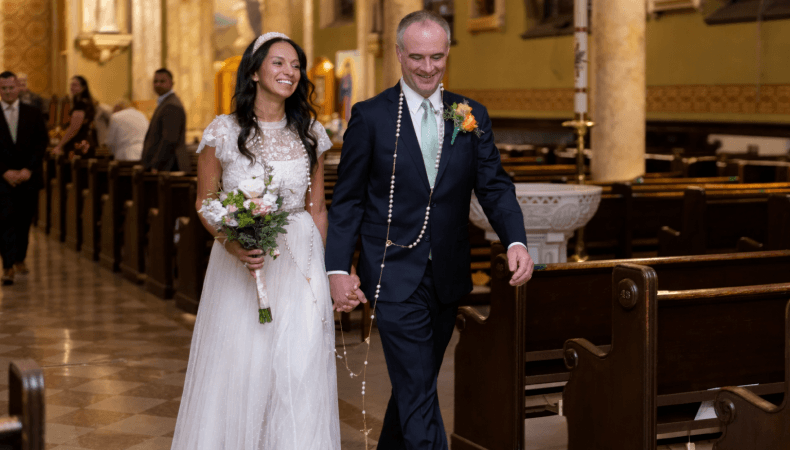
In simple terms, a couple who married outside of the Catholic Church (whether at a court or another religious ceremony) will not have the Church recognize that marriage as valid, but the couple can reconcile and have their marriage recognized by God and the Church by remarrying in a Catholic ceremony (convalidating their original marriage) before a Priest.
A convalidation ceremony should not be thought of as a blessing since the convalidating ceremony is a new act of consent. Therefore, the couple’s marriage becomes a religious marriage from the moment of the convalidating ceremony.
Why Couples Choose a Convalidation Ceremony
Couples can have a convalidation ceremony for multiple reasons:
- Religious fulfillment: Some want to have their marriage blessed as a sacrament, fulfilling their religious obligations.
- Return to faith: After getting married civilly, others rediscover their faith and want that marriage recognized religiously.
- Spiritual growth: Couples who feel emotionally bonded with one another through shared spiritual practices are naturally inclined towards strengthening that bond.
- Church participation: By participating in the church again, couples will gain an opportunity to receive all the sacraments again.
- Family or cultural expectations: Some cultures and/or families hold the religious aspect of marriage in very high regard.
For these reasons, for many couples getting their marriage convalidation signifies a new, spiritual beginning for themselves and their families.
Convalidation vs Wedding: Key Differences
| Aspect | Convalidation Ceremony | Traditional Wedding |
| Purpose | Validates an existing marriage | Begins a new marriage |
| Legal Status | Already legally married | Becomes legally married |
| Religious Role | Makes marriage valid in Church | Both legal + religious |
| Scale | Usually simple and intimate | Often grand and elaborate |
| Timing | After civil marriage | First marriage event |
The convalidation may have many of the same elements as weddings, including vows and blessings, but the ceremony itself is usually quite a bit softer than a wedding, though is just as significant spiritually.
Planning a Convalidation Ceremony: Essential Tips
Convalidation planning requires much of the same attention to detail as a traditional wedding, but is generally easier to execute.
1. Contact Your Parish Early
Contacting your local parish will help you find out about eligibility requirements for performing a convalidation. The specific documents will be needed for the convalidation, as well as the possible wait times between the initial contact and the eventual ceremony. It gives you the opportunity to program any special ceremonies you want into your wedding.
2. Complete Marriage Preparation
Couples must participate in the same type of marriage preparation classes required by traditional Catholic wedding couples; it will allow both of them to learn about the sacrament and to build upon their current relationship prior to their ceremony.
3. Choose the Ceremony Type
Together, decide whether the ceremony will be celebrated inside or outside of Mass. This will often depend on whether both parties are Catholic or one of them has another faith.
4. Keep It Simple
Convalidation ceremonies are typically very small and intimate. This means that many times the only people that will attend are either family, a priest and at most one or two other witnesses.
5. Celebrate Afterwards
After the ceremony many couples choose to hold an informal gathering or dinner as their way of formally celebrating the spiritual significance of their finally validated marriage.
Requirements for a Convalidation Ceremony
Couples must satisfy certain criteria to participate in a convalidation ceremony. The purpose of these criteria established by the Catholic Church is to ensure the marriage is valid both in terms of legality and spiritually and sacramentally.
Basic Requirements
- Legally married: The couple is legally married (via either civil ceremony or some other type of marriage other than Catholic).
- At least one Catholic spouse: Convalidation is typically required when either spouse is Catholic and they were married outside of the Catholic Church.
- Free and full consent: The couple should give full consent to get married again via convalidation (convalidation means they will go through the process of exchanging their vows again).
Documents Required
In order for the Church to verify someone’s identity, faith status and eligibility through documenting their marital status, the following is required:
- Civil marriage certificate: As proof that they are legally married.
- Baptism certificate: Specially for the Catholic spouse, preferably the most recent (recent because there is a chance that the previous baptism certificate has not been documented properly or has since become lost).
- Confirmation records: If the Catholic partner has received this sacrament.
- Proof of freedom to marry: Evidence that neither partner is bound by a previous valid marriage (e.g., have an existing marital relationship).
These documents have been provided to enable the Church to confirm that there are no legal or religious impediments.
Additional Conditions
There might be additional steps to take before proceeding with convalidation, as follows:
- Annulment of previous marriages: If either partner has been previously married, there will have to be an official annulment of the prior marriage by the Church in order for the couple to proceed with the convalidation process.
- Marriage preparation programs: Couples may need to participate in pre-marriage counseling/education programs to understand the Sacrament of Marriage.
- Meeting with priest: A priest will provide guidance to the couple, evaluate their situation and verify that they have satisfied all the necessary conditions prior to convalidating their marriage.
This step verifies that the couple is ready spiritually and practically to enter into the Sacrament of Marriage.
Core Elements for a Valid Marriage
For a marriage to be recognised as valid by the Catholic Church there are three essential elements:
- Capacity: The ability of both parties to enter into the marriage (both parties must have no impediment from marrying, either legally or canonically).
- Consent: Both parties are to give their free and full consent to their marriage and be free from any coercion, pressure or duress.
- Canonical Form: The marriage must be entered into according to the canonical form as established by the Church (the couple must exchange marriage vows before a priest or deacon and at least two witnesses).
If any one of these three elements is not present, then the marriage is not considered by the Church to be valid.
Common Mistakes to Avoid
With all due respect, the purpose behind a convalidation ceremony extends well beyond any religious formality. Additionally, there is a great deal of significance within the meaning of having your civil union transformed into a valid sacramental marriage as recognized by the Catholic Church.
1. Delaying Church Contact
One mistake that couples make is waiting far too long before they contact their parish for convalidating their civil marriage.
This is because the convalidation process may take many months to complete due to the paperwork, interviews and preparation programs the couple will need to complete before their convalidation is complete.
2. Ignoring Preparation Requirements
Preparation programs are not optional. Many couples think they are optional, but the Church typically requires those preparing to marry (including convalidate their marriage) to attend marriage preparation sessions.
These sessions help to educate the couple about the sacrament of marriage and help to prepare the couple spiritually and emotionally so the couple is ready to enter into a valid sacramental marriage.
3. Assuming It’s Just a Blessing
Another misconception about convalidation is that it is merely a blessing or a renewal of their vows. This is incorrect a convalidation is a new act of consent.
Therefore, when a couple comes in for convalidation, they are saying “I do” to one another and thus making their marriage sacramentally valid in the eyes of their Church.
4. Not Resolving Past Marriages
If either spouse had a previous marriage, that marriage must have been validly annulled prior to beginning the convalidation process.
If this has not been done, this will cause a complete blockage and the couple will be unable to proceed with the convalidation process.
5. Overplanning Like a Big Wedding
Some couples may think they should plan for their convalidation as if it were a large wedding. This type of planning can create unnecessary stress and cost.
Convalidation liturgies, in general, are very simple and focus on the spiritual aspect of their marriage rather than on elaborate planning or large celebrations.
Conclusion
The ceremony is also a wonderful way for couples to express their ongoing love and loyalty to each other and to renew their spiritual commitment together as they continue to grow in their faith.
Although many steps and/or requirements are needed to be fulfilled during preparation for the ceremony, when completed there will be both an emotional and spiritual connection to one another that was strengthened through the establishment of a faith based marriage.