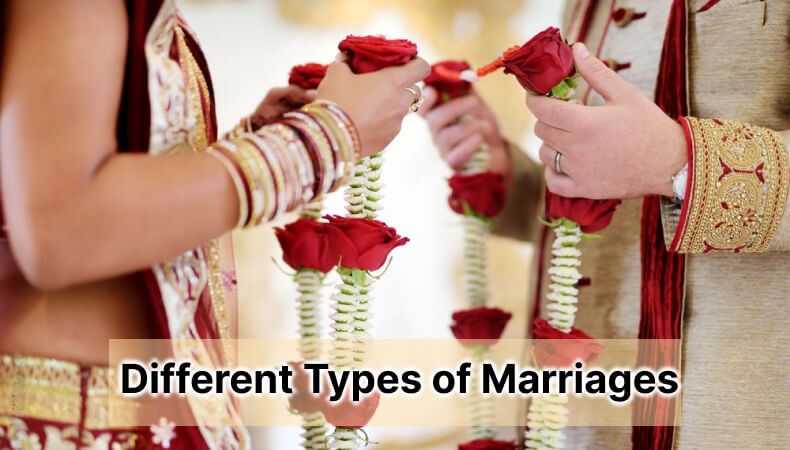
Marriage, as old as the ages, has taken diverse shapes across cultures and civilizations down the ages. Marriage has taken evolution in continuous fashion right from pompous dynastic processions to spiritual marriages among kindred brethren, along a vast spectrum of tradition and custom. Each society has woven its own web of bridal traditions based on its culture, values and social norms.
Whether it is the carefully arranged marriages of the ancient civilizations, the passion-driven marriages of the modern world or the liberal relationships of today’s societies, the vibrant hues of different types of marriages are indicative of the breathtaking and evolving scene of human relationships and commitments.
Which Type of Marriage is Best
The optimal type of Marriage actually depends on the individuals and what they need, value and are placed in as individuals. There is no one-size-fits-all because each form of Marriage contains its own areas of strength and weakness. Traditional monogamous marriages offer a good basis for emotional intimacy and commitment. Open marriages can be appropriate for those who prioritize freedom and freedom of communication. Arranged marriages can be successful if individuals develop love and respect for one another with the passage of time.
Same-sex marriages enshrine love and equality and bring down walls. Ultimately, the key to a successful Marriage is a combination of mutual love, respect, trust, communication and a willingness to change and learn together regardless of the Marriage of choice.
Different Types of Marriage List
1. Traditional Arranged Marriage
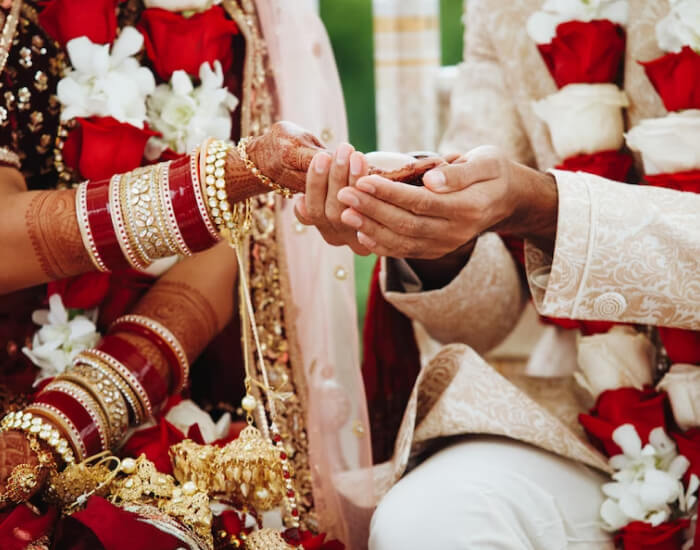
Arranged Marriage, an institution steeped in tradition, refers to the union of two individuals who are selected by their families or communities. It is not always a coerced union but is one of respect and agreement. Families try to make sure that the couple be compatible in values, social class and financial security in order to form long-lasting relationships.
Typically preceded by grand rituals and ceremonies, the well-tried institution is a paragon of communal wisdom transmitted over generations, valuing family harmony and tradition. With growing autonomy in relationships in modern society, traditional arranged marriage continues its hold in much of the world, itself a strange image of love and commitment. It is one of the oldest types of marriage.
2. Interfaith Marriage
Interfaith Marriage, a union of two from different faiths, overcomes the confines of religion to revel in love’s diversity. Amidst the world where cultures entwine these marriages are symbols of tolerance and acceptance. Couples work their way around the intricacies of merging their different beliefs, traditions and practices and become each other’s enriching experiences.
Such marriages bring an in-depth understanding of different religions and help to bring about harmonious living. Nevertheless, they can face issues caused by social biases or variations in religious practices. But still, interfaith marriages are a great source of cohesion and they prove that love can conquer all and form an unbreakable bond more powerful than any religious differences.
3. Companion-Based Marriage
Companion-based Marriage, an evolving idea that is gaining momentum, is focused on the basis of companionship and emotional intimacy between partners. In this form of Marriage, people look for someone with whom they have shared values, interests and mutual respect. Building a strong base of friendship and emotional connection is the priority before other aspects.
Companionship becomes the foundation of the relationship, encouraging mutual personal development and dreams. While physical attraction is not ruled out, the focus rests in developing a deep and substantial bond that stands the test of time. Companion marriages accept that genuine love is based on real friendship, yielding a lasting and satisfying union for the couple. It is one of the forms of contemporary marriage.
4. Common-law Marriage
Companionship becomes the foundation of the relationship, encouraging mutual personal development and dreams. While physical attraction is not ruled out, the focus rests in developing a deep and substantial bond that stands the test of time. Companion marriages accept that genuine love is based on real friendship, yielding a lasting and satisfying union for the couple. It is one of the forms of contemporary marriage.
Common-law Marriage eligibility requirements tend to involve such issues as cohabitation for a certain duration and living together as a married couple in the community. While it provides some legal protection, it could also have its own set of complexities particularly when the relationship fails as common-law spouses may require legal intervention to determine property rights and support obligations.
5. Independent Or Disengaged Marriage
Interfaith Marriage, a marriage of two belonging to different religions, crosses the boundaries of religion to indulge in love’s variety. In the midst of the world where cultures weave these marriages are the thrones of tolerance and acceptance. Couples navigate through the complexities of combining their various beliefs, customs and rituals and become one another’s enriching experiences.
These marriages are a great source of unity and prove that love can conquer everything and create an unbreakable bond more than any religious differences. However these marriages may encounter problems due to social prejudices or differences in religions being practiced. But still, they are a wonderful source of unity and prove that love is above all religions.
6. Monogamous Marriage
Monogamous Marriage, a commonly known type of Marriage, is grounded on the promise of two people to be devoted and exclusive to one another for the rest of their lives. Each shares fidelity, emotional support and companionship in the old-fashioned union, nurturing an intimate and deep relationship.
Monogamous marriages have their basis in religion and culture, where the sanctity of the relationship is prioritized and family stability, as well as the sense of security and trust and emotional closeness that it brings, is prioritized. Such a marriage gives a sense of belonging, togetherness and confidencethat enables couples to establish a solid foundation and navigate life together, hence it is one of the timeless and valued forms of marital relationships. It is one of the oldest forms of marriage.
7. Same-Sex Marriage
Same-sex marriage is gaining widespread acceptance in most nations worldwide. This liberal social transformation has been a long-time call of LGBTQ+ individuals and their allies for decades. Nevertheless, lately, some administrations have legalized same-sex marriage.
Same-sex couples from all societies are now able to enjoy the same marriage rights and privileges as opposite-sex spouses such as receiving anticipated tax advantages, homeownership, obtaining children with assisted reproduction methods or surrogacy services and entering into medical choices in behalf of one’s partner to cite a few to mention.
As this type of union is increasingly embraced around the world, we need to be sure that equal protection under the law is granted through equitable taxation policies, no matter how much more complex it would be in terms of implementing these measures. Sensible legislation, combined with more public approval, will ensure that members from diverse backgrounds are able to espouse love without prejudice while, at the same time, being accorded due recognition by their respective societies!
8. Parenting Marriage
Parenting marriage is an evolving concept that emphasizes co-parenting as the primary purpose of the Marriage rather than a romantic or emotional connection between partners. In this form of union, individuals enter into a marriage with the primary goal of raising children together, irrespective of romantic involvement. The partners may share living arrangements and responsibilities related to child-rearing while maintaining separate romantic lives. It is one of the types of modern marriage.
Parenting marriages are chosen by individuals who value the stability and support of a two-parent household for their children but may not wish to pursue a traditional romantic relationship. This unconventional approach to Marriage challenges societal norms and places the well-being of the children at the forefront.
9. Polygamous Marriage
Polygamous Marriage is a marital arrangement where one individual has multiple spouses simultaneously. Commonly practiced in some cultures and historical contexts, polygamy takes two primary forms: polygyny (one man having multiple wives) and polyandry (one woman having multiple husbands). The motivations behind polygamous marriages can vary, from cultural and religious beliefs to economic and social reasons.
While such unions can provide a sense of family and community, they can raise concerns about gender equality and individual rights. Modern societies often regulate or prohibit polygamous marriages but in some regions, it continues to be a customary practice, reflecting the diverse perspectives on Marriage worldwide. It is one of the types of modern marriage.
10. Left-handed Marriage
Left-handed Marriage, commonly known as a morganatic marriage, involves the union of two individuals from different social ranks where one partner holds a higher social status. Meanwhile, the other occupies a lower or unequal position. This type of Marriage has historically been prevalent in societies with strict social hierarchies and class distinctions.
In a left-handed marriage, the partner of higher social standing may face disapproval or opposition from their family or society due to the perceived disparity. As a result, Marriage often carries certain restrictions, such as the lower-ranking partner not having access to titles, privileges or inheritance rights. Left-handed marriages have showcased love transcending societal norms and standing the test of time despite the challenges.
11. Interracial Marriage
Interracial Marriage, a union between individuals of different racial or ethnic backgrounds, is a beautiful celebration of love that crosses cultural boundaries. This form of Marriage has faced historical and societal challenges rooted in prejudice and discrimination. However as societies progress, interracial marriages have become more accepted, promoting inclusivity and diversity.
Such unions enrich lives by fostering respect for and understanding of diverse cultures, traditions and customs. They offer an opportunity to create a harmonious blend of values and beliefs while also contributing to breaking down racial barriers and promoting social cohesion. Interracial marriages epitomize the power of love in transcending superficial differences and embracing the shared humanity that unites us all.
12. Secret Marriage
A clandestine or private marriage is a union where the couple keeps their Marriage concealed from family, friends or the public. This can be due to different reasons, like cultural, religious or social factors. Couples may choose secret marriages to avoid disapproval or conflicts or maintain personal privacy.
However, such unions may need help in terms of legal recognition and financial benefits especially if the secrecy prevents proper documentation. While secret marriages can be a choice for some, open communication and understanding are essential to navigate potential complexities in the long run. It is one of the unique types of marriage.
13. Shotgun marriage
Unlike most planned unions, a shotgun marriage occurs when a couple decides to tie the knot due to an unplanned pregnancy. Facing societal pressure and cultural norms that frown upon having children before Marriage, some individuals may choose this path to salvage their reputation or avoid embarrassment to their families.
While not always the ideal beginning, a shotgun marriage can lead to unique challenges and opportunities for growth. Couples may embark on building a strong and loving family despite unexpected circumstances. Communication, mutual support and commitment in navigating life’s surprises and embracing parenthood together. It is one of the unique types of marriage.
14. Love marriage
Love marriage is a touching celebration of love and choice in which two people opt for marriage due to mutual love and admiration of one another. Unlike arranged marriages, love marriages are largely because of the emotional bond and personal likes between the couple. They represent the ability to choose a life partner on the basis of common values, interests and compatibility.
Love marriages are an example of faith in the immense power of love to cross social boundaries and hence are prevalent in most modern societies. Love marriages represent the true meaning of romance, trust and companionship and therefore provide a platform for building a lifelong relationship involving love and mutual understanding. It is one of the oldest forms of marriage.
15. Convenience marriage
True to its description, a convenience marriage is a union in which two people choose to marry based on practical or economic considerations as opposed to love. Society pressure, economic stability, immigration advantages or inheritance motives tend to compel this type of Marriage. In contrast to love marriages, convenience marriages do not necessarily involve the profound emotional attachment that defines romantic unions.
Rather, they focus on practicality and mutual benefit. Although these marriages might meet certain external demands, they are likely to be problematic when it comes to emotional satisfaction and long-term compatibility. Effective communication and an understanding of the arrangement by both parties is very important in navigating the intricacies that come with convenience marriages.
16. Group Marriage
Group marriage or polyamorous or communal marriage, is a non-traditional marital structure where several individuals share a loving and committed relationship. In the unusual arrangement, every member of the group is an equal partner, with emotional, financial and household responsibilities shared equally.
Group marriages defy conventional assumptions of monogamy and accept the belief that love and intimacy are not limited to two individuals. Group marriages prioritize open communication, trust and consent of all group members. Although group marriages can create a high level of community and support, they necessitate a high degree of communication and emotional maturity in order to deal with the complexity of dealing with multiple relationships in the group.
17. Open Marriage
Open Marriage, a form of consensual non-monogamy, is an arrangement where both partners agree to have the freedom to engage in romantic or sexual relationships outside the Marriage. Unlike traditional monogamous unions, open marriages prioritize mutual trust, communication and open marriage. Couples may explore this option to embrace their desires, explore their sexuality or seek emotional connections with others while maintaining their primary commitment to each other.
This non-traditional approach challenges societal norms, emphasizing individual freedom and autonomy within the Marriage. While it can lead to fulfilling experiences and personal growth, open marriages also demand clear boundaries, honesty and ongoing communication to ensure all parties’ emotional well-being and happiness.
18. Proxy Marriage
A proxy marriage is another term for a “marriage by proxy,” which is a unique type of marital agreement wherein one or both spouses is/are absent at the time of the wedding ceremony. Instead, they are referred to by proxy, often a surrogate or a representative who represents them during the ceremony.
This form of Marriage is usually utilized when a partner is unavailable to attend due to military service, immigration problems or other transportation difficulties. Proxy marriages may be legally allowed in some jurisdictions but the conditions and stipulations are different. As much as they provide an outlet for couples who encounter distance or time constraints, they pose difficulties in terms of emotional involvement and communication between partners.
19. Child Marriage
Child marriage is a troubling and detrimental tradition that includes the Marriage of children under the age of 18 years. The traditional practice still continues in some areas because of traditional, economic and social reasons. But child marriage is bad for the physical, emotional and psychological health of girls and boys. It tends to lead to early childbearing, restricted schooling and greater susceptibility to abuse and poverty.
Efforts against child marriage have been made through legal reforms, public awareness campaigns and community mobilization to promote girls’ education and empower young people. Eliminating child marriage plays a vital role in ensuring children’s brighter and safer future, protecting their rights and enabling them to fulfill their potential.
20. Time-bound Marriage
Time-bound Marriage or temporary or fixed-term Marriage, is an unusual and unconventional form of marriage in which the couple commits to marriage for a certain period. In contrast to lifelong marriages, time-bound marriages have a pre-decided termination date. The practice of this union can be found in some cultures and religious practices wherein it fulfills certain purposes, e.g., traveling companionship, compliance with cultural mandates or response to transient situations.
Although time-limited marriages are perhaps not as prevalent as enduring unions, they underscore the adaptability and varied character of human bonds where people can select the length of their commitment according to their particular needs and situations.
21. Covenant Marriage
Covenant marriage is a unique and legally enforceable type of marital agreement offered in some jurisdictions that places stricter requirements and conditions on being granted a divorce. Couples entering into a covenant marriage make a greater commitment to each other, with an emphasis on pre-marital counseling, waiting periods, and fewer grounds for divorce. Couples with deeply held religious convictions tend to pursue this type of Marriage or wish for a more secure and long-lasting commitment.
Covenant marriages aim to minimize divorces as they try to promote open communication, counseling and reconciliatory efforts before divorce is ever attempted. Although they are not everywhere accepted, they do represent a determined effort to enhance the institution of Marriage and promote enduring and significant unions.
22. Ghost Marriage
Ghost marriage or spirit marriage is an intriguing and ancient practice in certain societies where a living individual marries a dead person. The ritualistic wedding has numerous purposes such as commemorating the deceased spirit, keeping family lineages intact as well as preserving property rights. In certain instances, the soul of the deceased is said to be helped by having a spouse in the afterlife.
The living party in a ghost marriage can marry a symbol, photo or even get married by an effigy of the dead. Such an exceptional practice shows the varied and complex beliefs revolving around Marriage and the importance of ancestral links in certain cultural settings.
23. Temporary Marriage (Nikah Mut’ah)
Temporary Marriage, also known as Nikah Mut’ah, is a unique and controversial form of Marriage in Islamic tradition. This type of Marriage is contract-based and has a fixed duration, agreed upon by both partners at the time of the marriage contract. Unlike traditional permanent marriages which require no end date, temporary marriages have a specified timeframe, ranging from hours to several years.
This practice is particularly prevalent in certain sects of Islam and is subject to varying interpretations and acceptance within the Muslim community. While some consider it valid and beneficial for specific circumstances, others view it as controversial and against Islam’s spirit of permanent Marriage. Temporary Marriage reflects the diversity of Islamic practices and beliefs concerning Marriage and its interpretation.
In conclusion, the different types of Marriage reflect human relationships’ richness and love’s multifaceted nature. Whether arranged or love marriages, each form holds unique significance and cultural context. Same-sex marriages celebrate the triumph of inclusivity and equality while open marriages challenge conventional norms.
Interfaith unions embrace the beauty of diversity while convenience and convenience marriages highlight the practical aspects of matrimony. Whether monogamous, polygamous or temporary, each type carries its own set of challenges and rewards. Ultimately, the success of any marriage lies in the foundation of love, communication and respect that binds two hearts together, shaping a lifelong journey of companionship and growth.