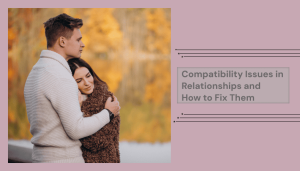

Relationships are meant to bring happiness and comfort for two people. People in healthy relationships are seen thriving in almost every aspect of their lives. But that doesn’t mean that there are no conflicts or disagreements. Conflicts or disagreements are natural in a relationship. Two people may have varied perspectives on different things. This happens because people cannot have the same experiences, expectations and emotional needs even when they are madly in love with each other or are from the same family. Problems arise when conflicts become worse.
A relationship goes through several phases in life. And in today’s fast-paced world, people face unique challenges. Digital communication, busy schedules, social media influences and shifting emotional expectations, everything impacts a relationship. However, learning how to navigate disagreements thoughtfully can help people have a healthy and more resilient relationship.
If you are looking for ways to resolve relationship conflicts, then this guide is for you. Here, we have outlined some practical, step-by-step strategies to resolve conflicts effectively while keeping your connection and bond intact. So, let’s get started…
Let’s first know the reasons that lead to misunderstandings in a relationship. Here we go…
Reasons Why Conflicts Happen
Before you begin to resolve conflicts, it is important to understand the root causes behind them. It is worth noting that disagreements often occur due to multiple reasons. Yes, there will never be a single-issue causing conflict in a relationship. Here are some common reasons for conflicts in relationship:
- Poor communication or miscommunication
- Lack of clear expression
- Differences in values, preferences or expectations
- Stress from external factors, including work, social media, family and finances
- Unresolved past issues
- Feeling of being unheard, unappreciated or misunderstood
- Emotional triggers related to past experiences
- Jealously for partner or for people connected with the partner
- Different financial and family goals
- Difference in priorities in life, and so on
Whatever the reason, recognizing the root cause for the conflict in a relationship can help resolve them mindfully, without blaming each other or wanting to win the argument.
Step-by-Step Strategies to Resolve Relationship Conflicts
Here is our step-by-step guide that you can use to resolve conflicts in your relationship (if any) and try building a more resilient and strong connection. Take a look…
Step 1: Take a Pause to Regulate Your Emotions
Begin with taking a pause. More often people start with reaction. That’s the worst thing that you can do. This is because it doesn’t lead you anywhere except for a deeper mess. Reaction is a natural tendency of the human brain. Whenever a person feels threatened or hurt, the brain’s fight-or-flight response activates. This makes rational conversation absolutely difficult at that time.
Therefore, you are suggested to:
- Take a brief pause before you respond or say anything.
- Take a few deep breaths to calm your mind and relax your racing heart.
- If possible, step away for a while.
- Give yourself some time to acknowledge the present emotional state.
- Avoid acting impulsively.
Following these will give you enough time to calm your mind, ponder every thought and respond thoughtfully rather than react defensively.
Step 2: Choose the Right Time and Setting
Timing & setting matters! Therefore, you’re suggested to choose the right time and setting for your discussion. If time and setting are not appropriate you may not be able to get any result; instead, you will end up creating a bigger mess out of a small situation.
Here is what you should do and not do during stressful moments:
Avoid discussing the issue in a public place at any cost. This is because public environments often lead to escalation.
Instead:
- Consider selecting a calm, private space for discussion.
- Do not pick up the topic when any of you two are exhausted, hungry or distracted.
- Try setting mutual expectations for respectful communication.
- Discuss to resolve or understand each other and not to confront or blame each other.
- Create safe environment signals, behaviours, words and emotional cues that make both partners feel secure, respected and emotionally protected
Step 3: Practice Active Listening
Most of the time, the main reason for a persistent conflict is people’s priority to defend instead of indulging in active listening. And that’s when the whole thing goes into toss. Ask yourself: if you will not listen to what your partner is trying to say or expects from you, how will you resolve anything?
The actual work of resolving issues or conflicts in relationships begins with active listening. Active listening involves fully understanding the other person’s perspective before you respond to anything.
Things that you should do to ensure you are present physically, mentally and emotionally during the conversation:
- Try maintaining eye contact.
- Maintain an open body language.
- Avoid interrupting your partner until they finish.
- Avoid distractions (such as your mobile phone, TV or anything else).
- Consider asking clarifying questions whenever you miss something.
- Avoid making assumptions.
- Reflect back what you hear (“What I just now heard is or what I’m hearing is… and so on”).
- Be respectful to your partner’s emotions.
- Avoid making judgements or contradicting things.
- Listen to your partner with immense love, care and genuine understanding.
Indulging in active listening will not only help validate the other person’s feelings but will also reduce defensiveness and help build trust.
Read More: Relationship Problems and Solutions: A Complete Guide for Couples
Step 4: Consider Using “I” Statements Throughout the Discussion
Blame-based language should be strictly avoided when attempting to resolve the conflict in a relationship. Blaming your partner often escalates arguments and leads you to nowhere. Instead of using statements like “You always…” or “You never…,” consider using the “I” statement. “I’ statements encourage open dialogue as they allow you to express your feelings without blaming the other person. This makes the conversation safer and more constructive for both partners.
Here are some ways you can express your emotions more subtly and gently:
Use statements like:
“I feel hurt when…”
“I sometimes feel unheard when…”
“I sometimes feel not supported when…”
“I feel overwhelmed when…”
This approach will help communicate personal emotions without accusing or criticizing and encourage open dialogue rather than escalating the conflict.
Step 5: Try Identifying the Root Cause
No conflict happens for no reason. Hence, it is crucial to identify the real cause of the conflict to take effective measures in the right direction.
To find the root cause; consider:
- Asking gentle, exploratory questions.
- Looking beyond the surface disagreement.
- Being supportive.
- Understanding your partner’s emotional needs.
Once you understand the underlying motivations behind the issue, you can address it more effectively and prevent the same conflict from recurring.
Step 6: Validate Feelings Even During Disagreement
Often couples fail to resolve conflicts as they misunderstand validation with agreement. No, validation does not mean agreement. It simply means to acknowledge that the other person’s feelings are real and important.
So, instead of thinking that validating your partner’s feelings during disagreements will make you small or weak, understand that it reflects emotional maturity and strengthens mutual respect.
To validate your partner’s feelings all you have to do is to use the right statements, such as:
- “I did not know that it would impact you in this way.”
- “I am really sorry, I made you feel that way, and so on.”
When you make your partner feel emotionally validated, it leads to reduced tension and opens the door to collaborative problem-solving.
Step 7: Collaborate to Find Solutions
You cannot do it alone! So, instead of trying to resolve the conflict alone, collaborate with your partner to find the way out that respects both individuals’ needs.
Things that you can follow to find best solutions collaboratively:
- Site together and talk about various possible solutions.
- Do not make any judgment.
- Find a middle ground that is favourable and respectful for both.
- Set clear and realistic expectations from each other in the relationship.
- Focus on future improvement instead of pointing at past mistakes.
- Be ready to work as a team for building a more resilient and healthier relationship.
Finding solutions along with your partner will help you get a way out that is respectful, meaningful, workable and favourable for both of you, instead of doing it alone and reaching nowhere!
Step 8: Be Accountable for Your Mistakes
Taking accountability does not mean that you are weak, instead, it shows that you are mature enough to take responsibility for your mistake. Taking responsibility is a powerful step toward healing and genuinely apologising can help rebuild trust and demonstrate emotional maturity.
Here is what you can do:
- Begin with genuinely acknowledging your actions or words.
- Avoid giving excuses or being defensive.
- Show your willingness to change behaviour.
Additionally,
- Express sincere regret for what you did wrong.
- Say words that show you are genuinely sorry for your act.
Doing all these will help strengthen relationships and reinforce respect and confidence.
Step 9: Set Clear & Healthy Boundaries
Sometimes conflicts happen due to unclear boundaries between partners. Whenever one partner crosses those boundaries, conflicts happen. To avoid that situation, you are advised to set healthy boundaries and define acceptable behaviour so that both of you feel emotionally protected and cared for.
Things to keep in mind:
- Being respectful whenever disagreements happen.
- Communicating limits respectfully.
- Clearly mentioning expectations around time, space or communication.
- Recognizing personal needs without guilt.
Setting clear boundaries in a relationship is often viewed as a condition, which is not the right way to see it. In fact, boundaries help build strong relationships and trust, while preventing recurring conflicts.
Step 10: Rebuild and Reconnect
Only discussing things once and setting clear boundaries for the future will not help resolve the conflicts entirely. You need to maintain emotional closeness after the disagreement to ensure a healthy relationship.
Here is what you shall do to rebuild and reconnect:
- Check in with each other emotionally.
- Reinforce positive changes.
- Invest in affectionate gestures.
- Spend time together in shared activities.
- Indulge in meaningful conversations.
All these acts will not only help rebuild emotional closeness, but will also reinforce trust, commitment and long-term relationship stability.
Step 11: Practice Emotional Intelligence
No matter why conflicts happen, being emotionally intelligent can help you tackle issues more brilliantly and calmly. Emotional intelligence helps you understand and manage emotions in a better way. When you learn to manage your emotions, you become better able to resolve conflicts more mindfully.
Emotional Intelligence include:
- To be self-aware.
- To develop empathy
- To improve communication skills
You can deepen your emotional awareness by…
- Reflecting on personal triggers.
- Practicing mindfulness.
- Seeking feedback from trusted individuals.
- Learning from past conflicts rather than repeating patterns.
Step 12: Seek Professional Help
If you think your conflicts are beyond repair on your own, then it’s better to seek professional help. There are numerous expert and experienced professionals who offer couple therapy or professional guidance, and they can help you with structured frameworks for communication and healing so that you can build more resilient connections.
Mistakes to Avoid When Resolving Relationship Conflicts
Here are few mistakes that you should avoid at all cost to ensure healthy connection:
- Avoid bringing up past or unrelated issues.
- Avoid using sarcastic language or tone.
- Avoid dismissing your partner’s feelings.
- Avoid interrupting your partner when he/she speaks.
- Avoid assuming things that don’t exist or are unlikely to happen.
- Avoid assuming negative intentions.
- Avoid getting into conflict over trivial matters.
- Avoid bringing each other’s family or close people during conflict.
Avoid anything that you know can lead to conflict or misunderstanding. Doing things repeatedly that you know should be ignored can lead to resentment in a relationship and increases your chances of unresolved conflict and emotional distance.
Putting it all together…
So, there you have it: the step-by-step strategies to resolve issues in your relationship. Conflicts are not always the sign of a broken relationship; they in fact, give you the way to reflect, change and grow together. All you need is to understand them calmly, attempt to address them with patience, empathy, and effective communication. If you are presently facing issues in your relationship and want to resolve them with effective strategies, then follow the steps outlined above. They will help you navigate the conflict, resolve them and build a more resilient and healthy relationship in the long run. Happy Resolving… 😊 😊