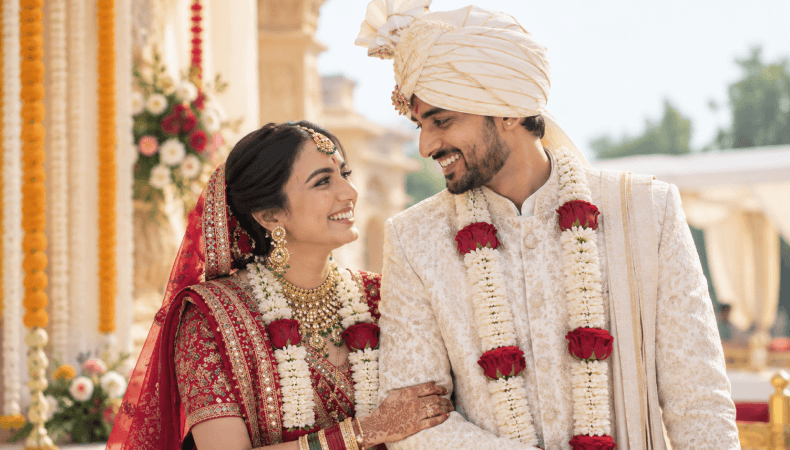
India has many cultures and wedding traditions. Among several Indian cultures, Gujarati weddings stand out for their colourful ceremonies, traditional outfits, lively music, delicious food and meaningful rituals. They follow Hindu traditions, but customs can vary by family, community and region.
Some weddings include several days of celebrations, while others are simple and small. Every part of a Gujarati wedding, from pre-wedding functions and wedding ceremonies to traditional food and post-wedding celebrations feels special and unique.
If you are planning to host a Gujarati wedding and want to learn more about the culture and rituals, then read this post. This guide covers everything you need to know about Gujarati wedding traditions and customs. So, without any further ado, let’s get started…
Table of Contents
- What Makes a Gujarati Wedding Truly Special?
- I. Pre-Wedding Rituals in a Gujarati Wedding
- II. Main Gujarati Wedding Day Rituals
- III. Post-Wedding Rituals in a Gujarati Wedding
- Traditional Gujarati Wedding Outfits
- Gujarati Wedding Food and Menu Ideas
- Quick Tips for Planning the Gujarati Wedding Menu
- Gujarati Wedding Decorations and Themes
- How to Plan a Gujarati Wedding
- FAQs
What Makes a Gujarati Wedding Truly Special?
Gujarati weddings are known for their joyful celebrations, family involvement, colorful outfits and rich traditions. Several ceremonies take place before and after the wedding. Family members help with the preparations, take part in rituals, sing traditional songs and welcome the bride and groom with blessings and gifts. Here are some things that make Gujarati weddings special:
- Meaningful Rituals: Each ceremony represents an important step towards married life.
- Colourful Clothing: Brides often wear traditional sarees or lehengas, while grooms choose sherwanis, dhotis or other traditional outfits.
- Family Celebrations: Relatives from both families come together to celebrate the event.
- Music and Dancing: Garba, folk songs along with Bollywood music are major part of Gujarati weddings.
- Traditional Food: Gujarati wedding menu often includes traditional dishes, such as farsan, sweets, snacks, and a variety of vegetarian dishes.
- Warm Hospitality: Guests are welcomed with food, blessings and traditional customs in Gujarati wedding.
*Gujarati weddings vary significantly by region because the customs followed by Gujarati Jain, Vaishnav, Swaminarayan and other communities differ often.
Gujarati Wedding Guide: Beautiful Traditions, Meaningful Rituals & Celebrations
Here is what you can expect from a Gujarati wedding celebration. Take a look…
I. Pre-Wedding Rituals in a Gujarati Wedding
Pre-wedding ceremonies are an important part of Gujarati wedding celebrations. They help prepare the couple and their families prepare for the wedding and provide opportunities for relatives to meet, exchange blessings and enjoy the celebrations before the main event. Some of the most popular Gujarati pre-wedding rituals include:
1. Chandlo Matli
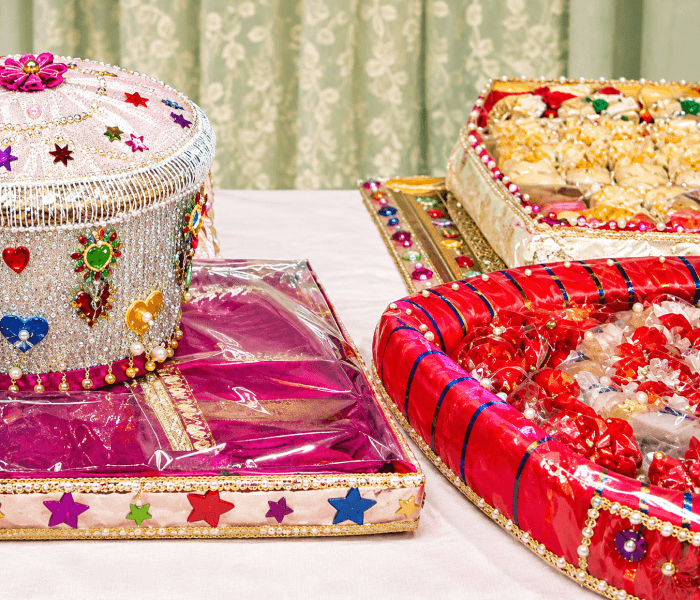
Chandlo Matli is an engagement-related tradition followed by many Gujarati Hindu families. The bride’s family visits the groom’s home with gifts and sweets. A male family member then applies a red auspicious mark, called a chandlo, to the groom’s forehead.
The ceremony symbolises the families’ acceptance of the marriage and the beginning of their relationship. Customs and gifts may vary between families.
2. Gol Dhana Ceremony
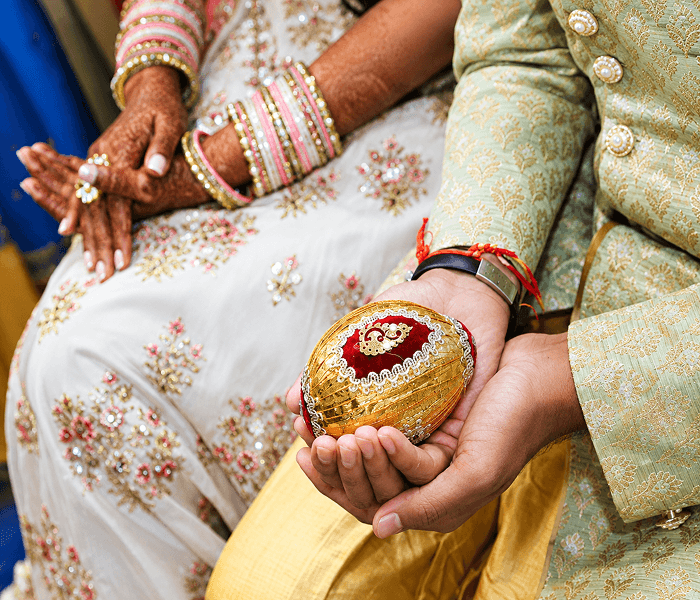
Gol Dhana is yet another popular pre-wedding ritual in Gujarat. It is actually Gujarati engagement ceremony. Gol Dhana marks an important step towards marriage.
The couple exchange rings, while family members offer blessings, sweets and gifts. The ceremony is usually held at the groom’s home or a venue where both families gather and it is often followed by a meal or celebration.
3. Ganesh Sthapana
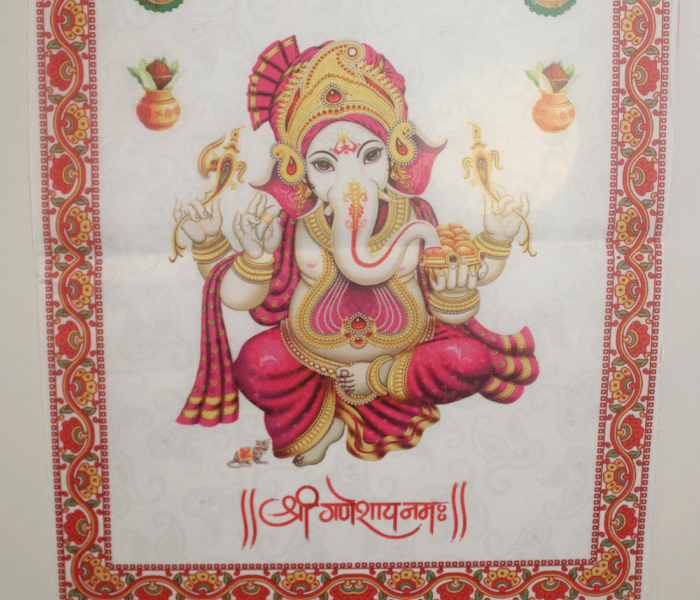
Ganesh Sthapana is yet another significant ritual that takes place before the wedding. During Ganesh Sthapana, the family worships Lord Ganesha and seeks his blessings for a smooth wedding and a happy married life. This ritual usually takes place a day or a few days before the wedding.
4. Mandap Muhurat
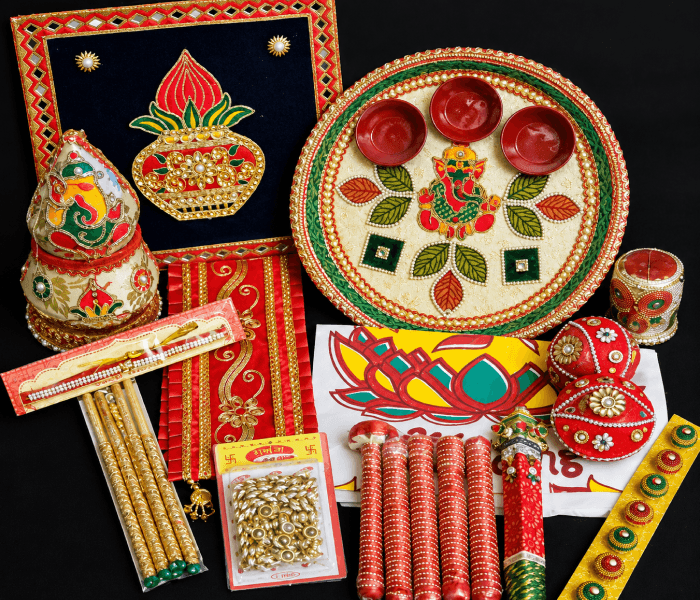
The mandap is a decorated structure where the bride and groom take feras during the wedding ceremony. The mandap is usually decorated with flowers, leaves, and lights, making it the centre of the wedding rituals. Before the wedding, Mandap Muhurat is performed to seek blessings for the ceremony and the couple’s new life.
5. Pithi or Haldi Ceremony
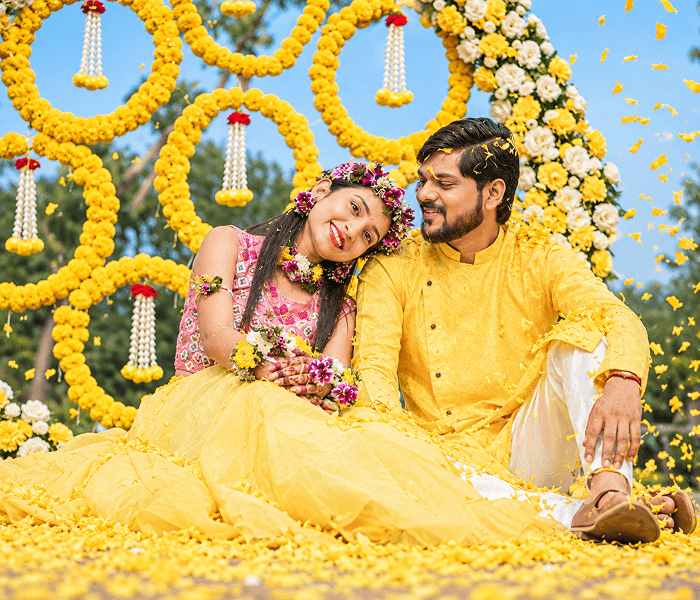
The Pithi ceremony is similar to the Haldi ceremony followed in other Indian wedding traditions. During the Pithi ceremony, family members apply a turmeric paste to the bride and groom and bless them. The event is often celebrated with folk music, traditional songs, dance and snacks. Families often hold separate ceremonies at the bride’s and groom’s homes.
6. Mehndi Ceremony
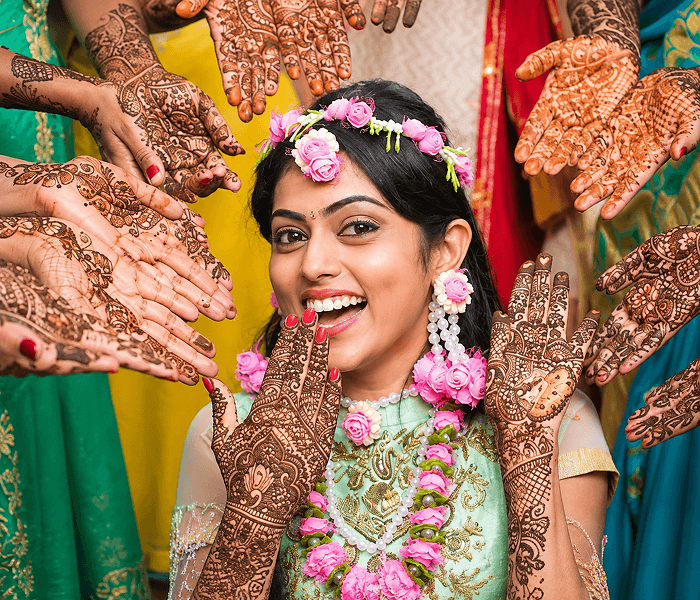
Mehndi is a popular pre-wedding ceremony in Gujarati tradition. Like in other states, the bride’s hands and feet are decorated with henna designs in Gujarati weddings. The event often includes music, dancing, colourful decorations and refreshments. Other wedding guests (female relatives and friends) also apply henna to their hands.
7. Garba and Sangeet Night
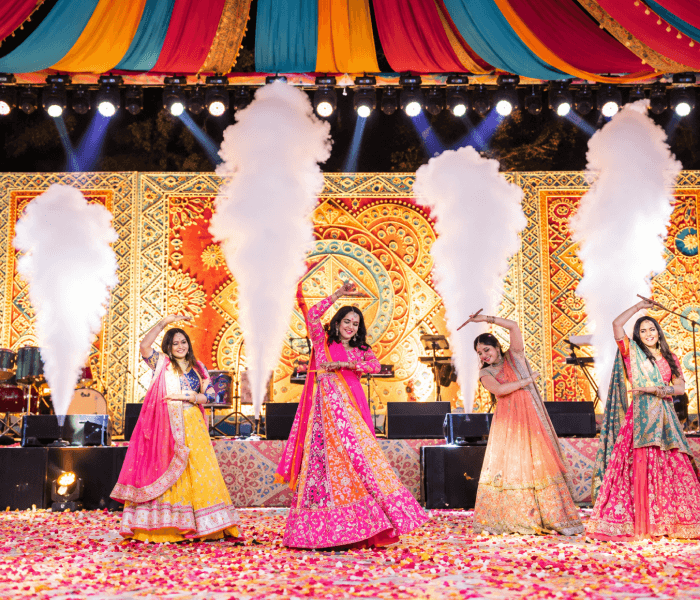
Garba is a traditional Gujarati folk dance performed in a circle, bringing family and friends together through music and dance. The Sangeet ceremony includes songs, dance performances, and fun activities by both families.
Both hosts and guests wear colourful traditional outfits such as chaniya cholis and kediyus. Some weddings combine Garba and Sangeet into one event, giving both families a chance to bond before the wedding.
II. Main Gujarati Wedding Day Rituals
The wedding day is the most important part of the Gujarati wedding celebration. It includes several rituals and customs, such as welcoming rituals, prayers and ceremonies to formally unite the couple. Here are the details; take a look…
8. Baraat and Ponkvu
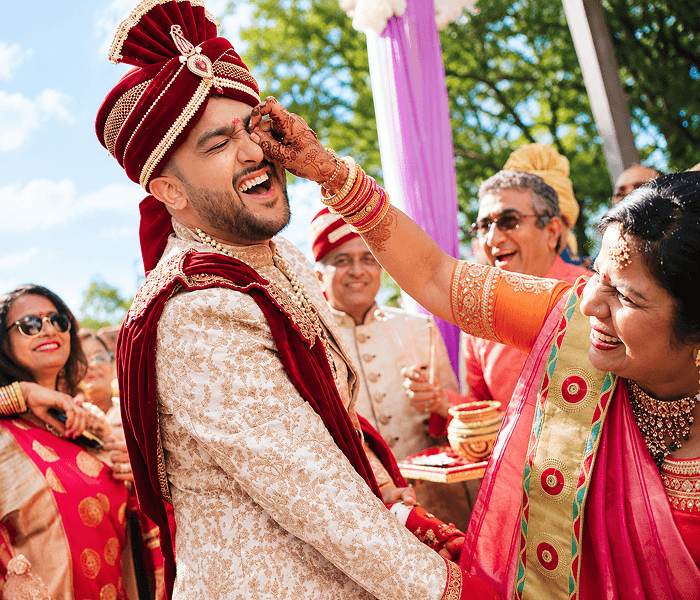
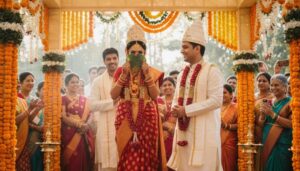
The groom arrives at the wedding venue with family and friends in a lively procession, which is called the Baraat. The bride’s family welcomes him with Ponkvu, a ritual in which a female family member performs aarti and applies a tilak. In some families, the bride’s mother playfully tries to catch the groom’s nose, reminding him to stay humble.
9. Jaimala or Varmala
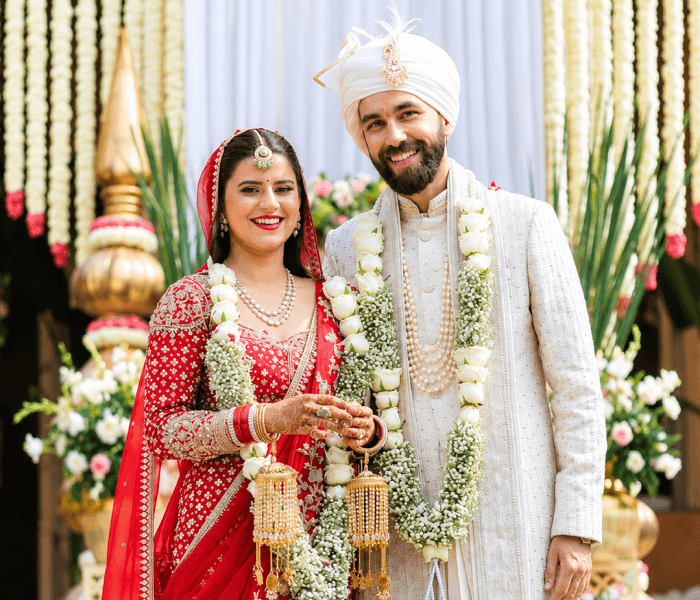
After welcoming baraat, Jaimala (also known as Varmala) takes place. It is when the bride and groom exchange flower garlands. It symbolises their acceptance of each other as life partners. This moment is often celebrated with music, cheers and photographs.
10. Antarpat
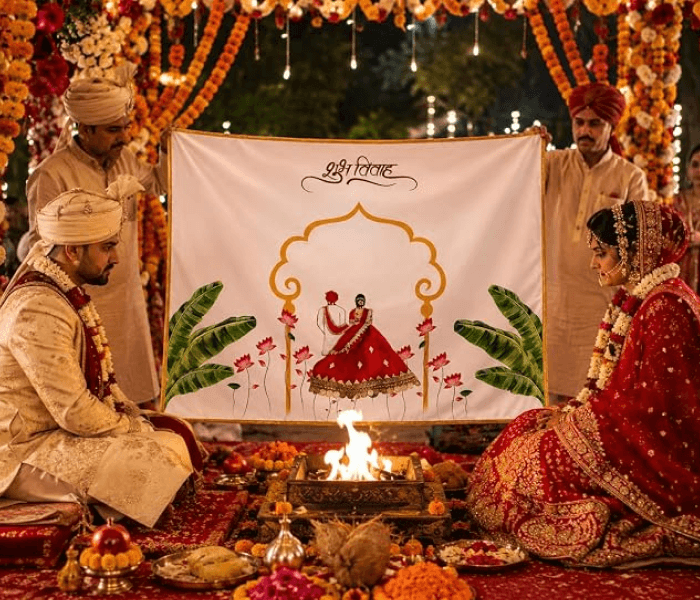
Antarpat is a very popular tradition in Gujarati weddings. It is a cloth screen placed between the bride and groom before the wedding ceremony. The priest chants prayers and the screen is lowered at the right moment, symbolising the couple’s union. The ritual’s timing may vary across Gujarati families.
11. Kanyadaan
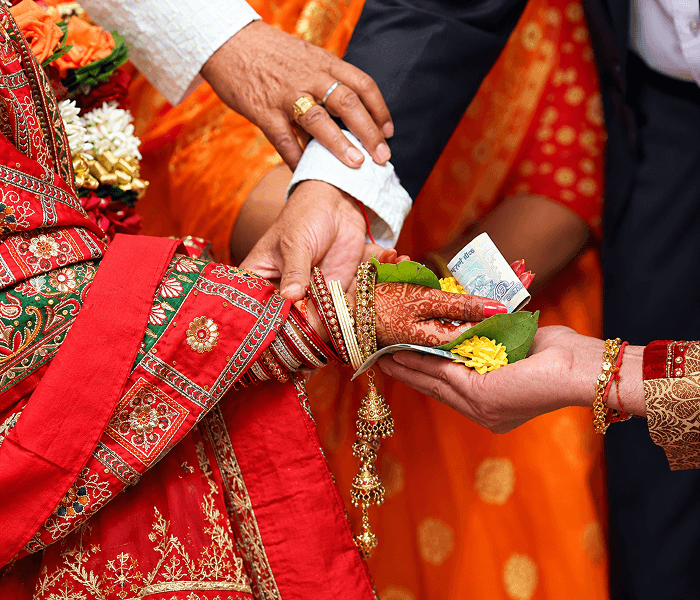
Kanyadaan is a popular Hindu wedding ritual that takes place in almost all the Hindu wedding ceremonies. In this, the bride’s parents bless the couple as their daughter begins married life. They place bride’s hand in the groom’s hand while the priest recites prayers. This ritual usually symbolizes love, trust and mutual respect between the couple.
12. Hasta Milap
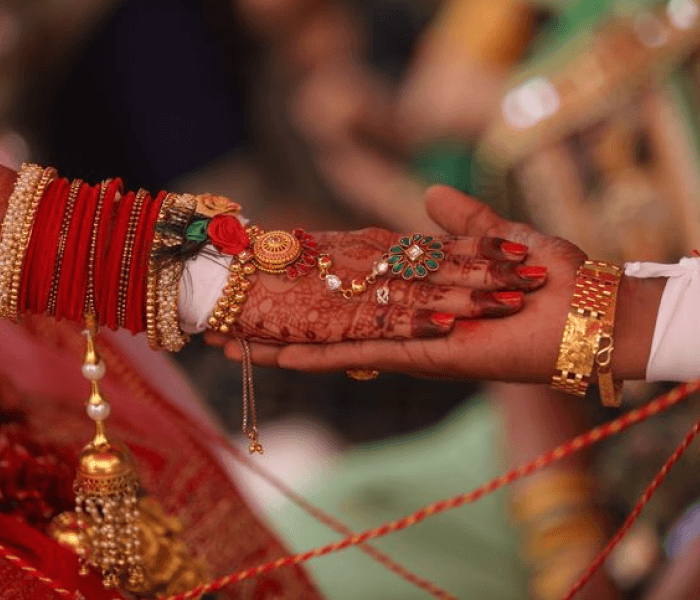
Hasta Milap is the ritual of joining the bride and groom’s hands to symbolise their union. Couple’s garments are tied together, representing their commitment to support each other and share life’s responsibilities. It happens before Mangal Phera ceremony.
13. Mangal Pheras
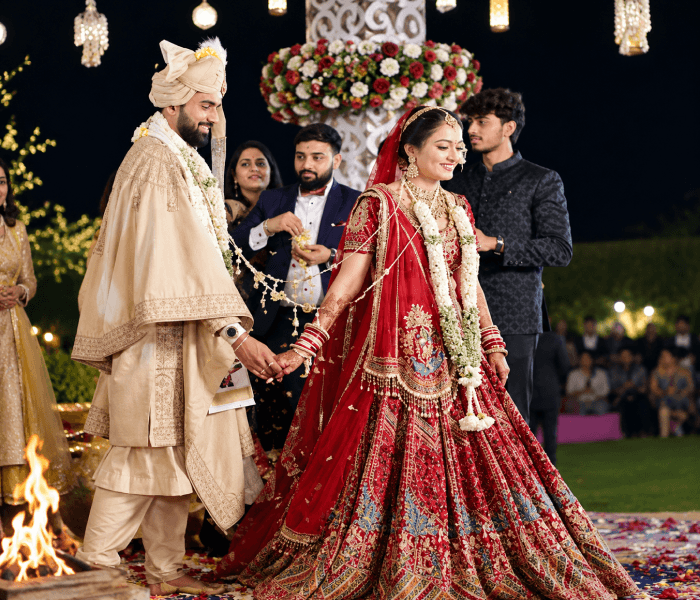
Mangal Pheras are an important Gujarati Hindu wedding ritual. Couple walks around the sacred fire while the priest chants prayers. Unlike other Hindu traditions where couples take seven Pheras, Gujarati traditions include four pheras. They often symbolise duties, prosperity, love and spiritual well-being. The ritual represents the couple’s commitment to supporting each other throughout married life.
14. Saptapadi
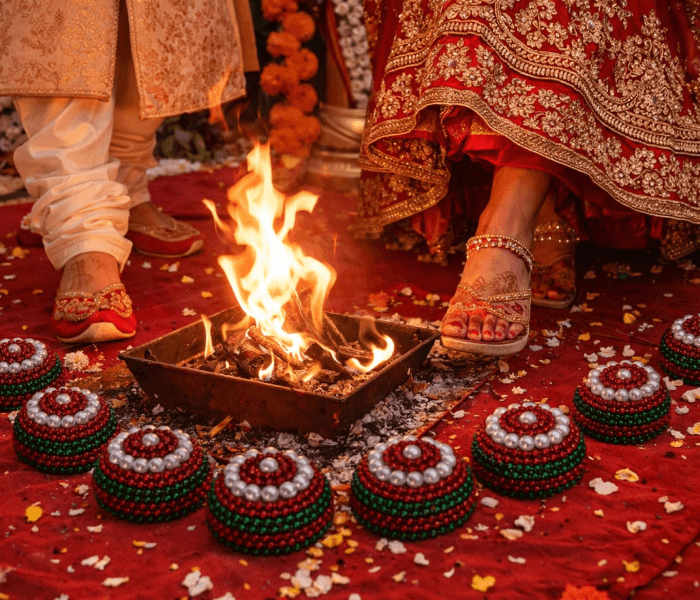
Saptapadi means seven steps taken by the couple. Each step represents a promise for their married life. These promises focus on nourishment, strength, prosperity, family well-being, mutual support, harmony and lifelong companionship. The ritual highlights trust and shared responsibilities.
*Its practice may vary across Gujarati communities, with some performing it separately from the pheras.
15. Sindoor and Mangalsutra
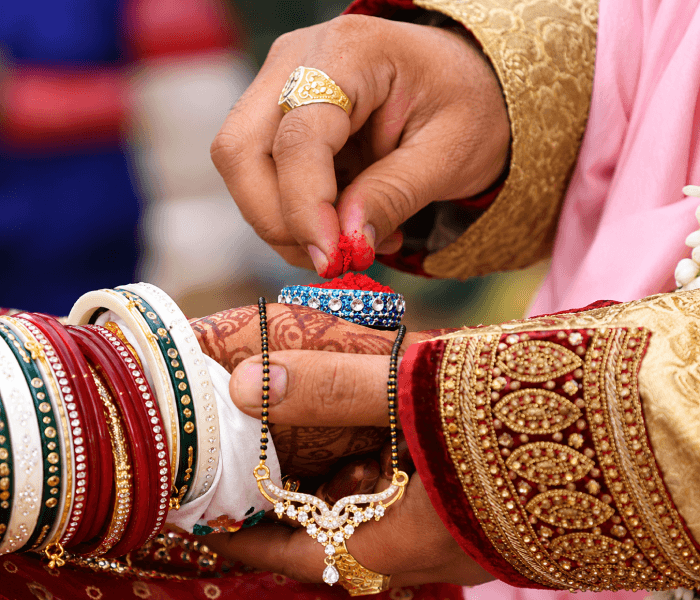
The groom applies sindoor (vermilion) to the bride’s hair parting and ties a mangalsutra around her neck as symbols of marriage. Th
*These customs may vary across all Gujarati communities depending on regional traditions, religious practices and family preferences.
16. Aashirwad
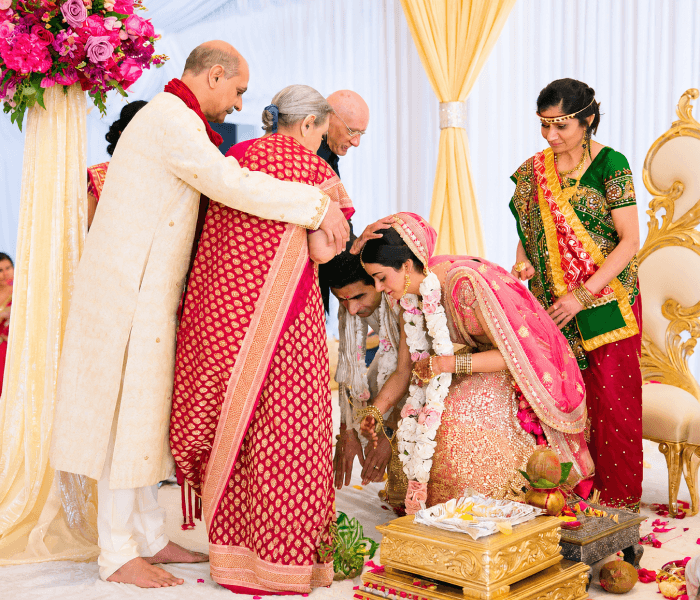
After all the wedding rituals, elders and family members bless the couple and wish them a happy married life. They shower couples with gifts and blessings. Aashirwad marks the end of the main ceremony and allows everyone to celebrate the couple’s new beginning.
III. Post-Wedding Rituals in a Gujarati Wedding
The Gujarati wedding celebration continues even after the main wedding ceremony. Post-wedding rituals welcome the bride into her new household and give both families more time to celebrate the marriage. Here are the details of post-wedding rituals; take a look…
17. Vidaai
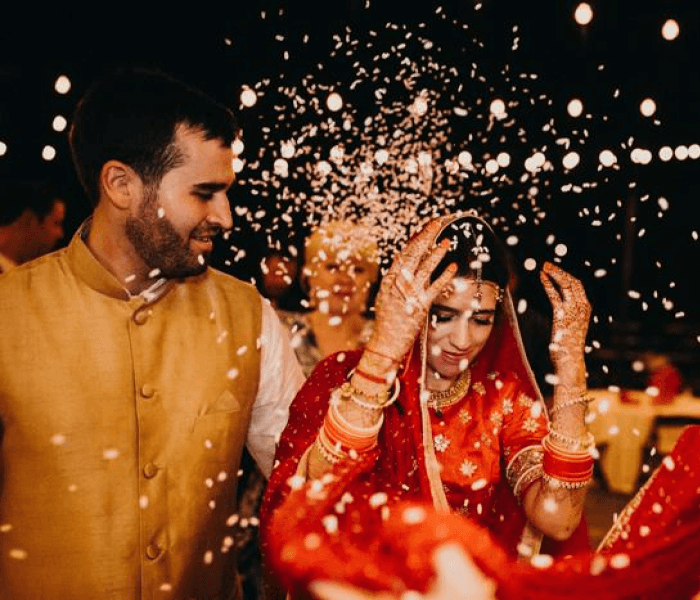
Vidaai is the emotional farewell. This the time when the bride leaves her parental home to her husband’s home to begin married life. Her family blesses her and wishes her happiness.
18. Griha Pravesh
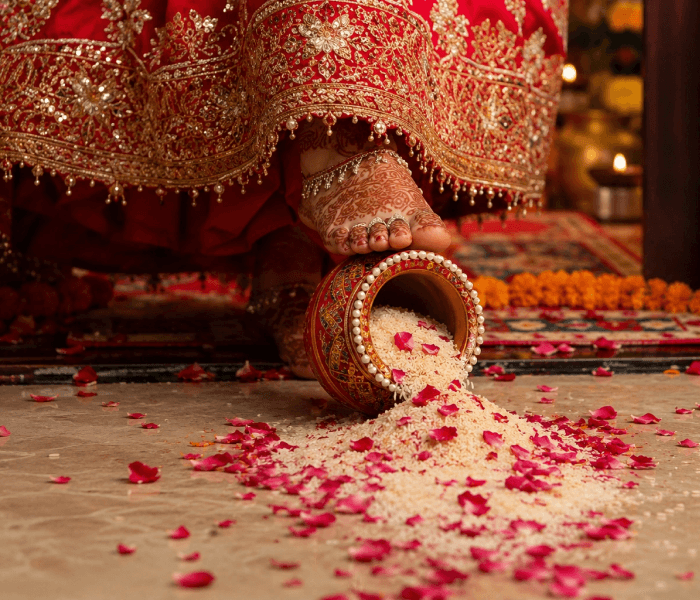
Griha Pravesh is the ritual that welcomes the bride into the groom’s home. The groom’s family welcomes the bride with aarti and guides her inside. In some families, she gently knocks over a rice-filled vessel, symbolising prosperity and good fortune. This Griha Pravesh ritual marks her welcome into her new home.
19. Aeki Beki
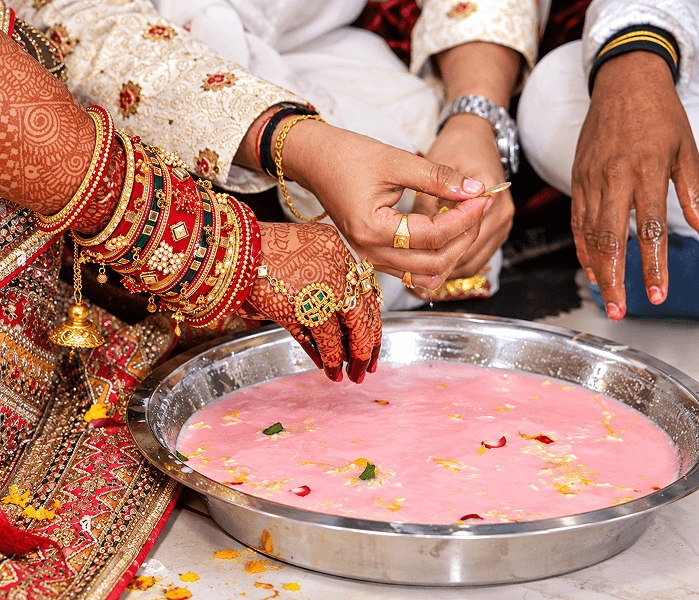
Aeki Beki is a traditional Gujarati wedding game played after the bride arrives at the groom’s home. In this, a ring is placed in a vessel filled with water or milk. The couple is asked to search a ring in the vessel, while family members cheer them on. It adds fun to the celebrations after the wedding rituals and make the wedding feel a little comfortable after vidayi ceremony.
20. Reception
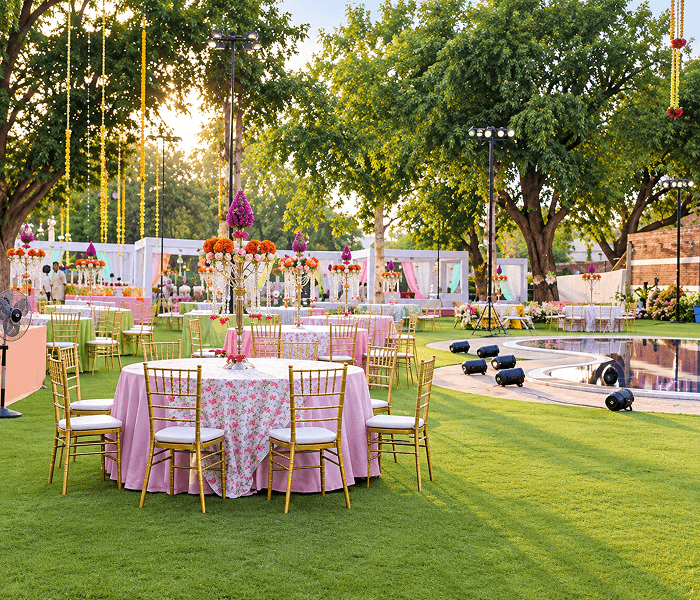
Reception is optional. Many Gujarati families still organise a wedding reception after the main ceremony. They can plan the event on the same day or on another date. Wedding reception gives relatives, friends and colleagues who could not attend the wedding ceremony the opportunity to congratulate the couple. It usually includes a sumptuous meal, dance, entertainment, photographs and lots of fun.
Traditional Gujarati Wedding Outfits
Gujarati wedding clothing is known for its bright colours, detailed embroidery and traditional designs. The bride and groom wear special outfits for their wedding. Here are the details:
I. Gujarati Bridal Wear
A Gujarati bride often wears traditional Gujarati outfit, such as:
Panetar Saree: The Panetar is a traditional Gujarati bridal saree. It usually features white or cream with red or maroon borders and patterns. Brides often wear it during wedding rituals.
Gharchola Saree: Gharchola saree is yet another popular Gujarati wedding outfit. It features grid-like patterns, zari work and traditional designs. Red and green are popular colours, but other designs are also available.
Lehenga: Lehenga is also gaining traction among Gujarati brides. Many modern brides choose embroidered lehengas in shades such as red, maroon, pink, green or ivory.
Brides can choose any of these outfits. These outfits are often paired with traditional Gujarati jewellery, such as necklaces, earrings, bangles and rings. Some brides even choose to wear a nath, maang tikka or kamarbandh. The final look; however, depends on the bride’s style, family traditions and wedding ceremony.
II. Groom’s Wedding Outfit
Gujarati grooms often wear a sherwani, kurta with a jacket or another traditional outfit for the main wedding ceremony. Popular color options include, cream, gold, beige or pastel sherwani. Some grooms even prefer brighter colours such as maroon, red or green. The outfit is often completed with a traditional safa or turban. Besides that, the groom may also wear a stole, embroidered footwear or a necklace.
For Garba and Sangeet, grooms often choose a kediyu, a traditional Gujarati outfit or a colourful kurta.
III. Outfits for Wedding Guests
Guests in Gujarati weddings can choose to wear any Indian or fusion outfits depending on the ceremony and dress code.
Women often wear sarees, lehengas, anarkalis or salwar suits. Men, however, wear kurtas, bandhgalas, sherwanis or formal ethnic wear.
For Garba and sangeet night, wedding guests also choose colourful and comfortable outfits.
Gujarati Wedding Food and Menu Ideas
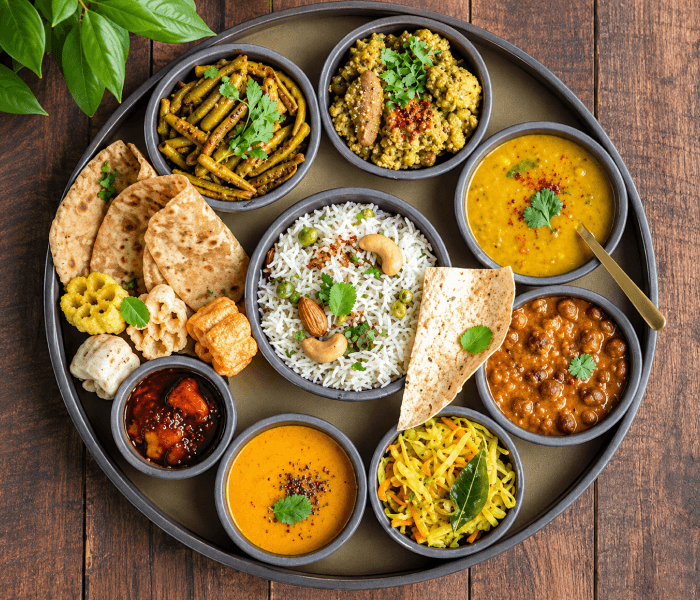
Food is one of the most important parts of Gujarati wedding celebrations. The Gujarati wedding menu often includes a combination of traditional Gujarati dishes, snacks, sweets and popular Indian favourites.
More often than not, Gujarati families prefer vegetarian menus. However, some families may prefer including non-vegetarian dishes depending on their community and personal preferences. Here are the details:
Traditional Gujarati Wedding Menu
A traditional Gujarati wedding meal ofen include:
- Welcome Drinks: Popular options include chaas, jaljeera and fresh lime water.
- Farsan and Snacks: Farsan refers to a variety of savoury snacks commonly enjoyed in Gujarati cuisine. Popular options include khaman, dhokla, khandvi, patra and samosa.
- Main Dishes: Gujarati kadhi, undhiyu, sev tameta nu shaak, aloo shaak, seasonal vegetables, kofta, paneer dishes along with other popular Indian preparations.
- Breads: Main dishes are often served with puri, thepla, rotli or bhakhri.
- Rice and Khichdi: It often includes steamed rice, khichdi or pulao
- Accompaniments: Gujarati wedding menu is incomplete without accompaniments, they often include dal, papad, pickles and chutneys.
- Desserts: It often includes Gujarati favourites, such as shrikhand, basundi, mohanthal along with jalebi, gulab jamun and other popular desserts. Some weddings serve two or three desserts, while larger celebrations may offer a dedicated sweet counter. Modern wedding menus may also include ice cream, cakes, pastries, and fusion desserts.
The wedding menu often depends on the season, region, budget and type of celebration. For example, undhiyu is especially associated with winter in Gujarat, while farsan such as dhokla and khandvi can be served throughout the year. Moreover, dhokla, khandvi, patra, and samosa are popular choices for wedding receptions, engagement functions, and pre-wedding events.
Depending on the budget and style of wedding, families choose their wedding menu. For evening celebrations, such as wedding reception, families may also include chaat, sandwiches, live snack counters and other regional favourites so that guests have more variety without making the meal look to heavy.
Quick Tips for Planning the Gujarati Wedding Menu
Choosing the Gujarati wedding menu may seem like task. Here are some quick tips to plan the menu without much effort. Take a look…
- Consider the number of guests and the event’s duration.
- Choose seasonal dishes and ingredients for ease and comfort.
- Pay attention to family preferences.
- Include a mix of familiar favourites and a few special items.
- Offer suitable options for children, older guests and people with dietary restrictions.
- Clearly identify dishes containing common allergens where practical.
- Confirm whether the family wants a strictly vegetarian menu.
Your focus should be on creating a well-balanced wedding menu instead of adding too many dishes in the menu. Make sure your wedding menu reflects the family’s preferences and suit guests’ dietary needs.
Gujarati Wedding Decorations and Themes
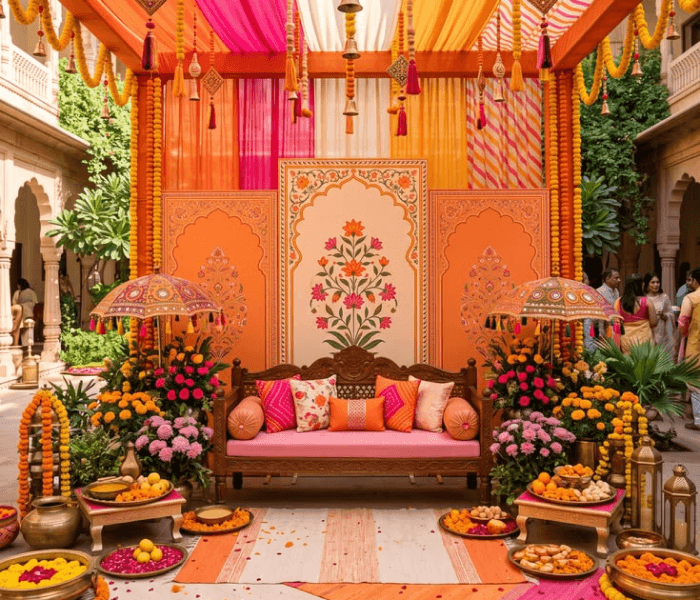
Gujarati wedding decoration often features bright colours, fresh flowers, traditional fabrics, decorative lights and other vibrant details. Some of the most popular decoration ideas include:
- Traditional Mandap: Mandap is one of the most important parts of Gujarati weddings and it is often decorated with flowers, garlands and warm lights.
- Garba Setup: It often features decoration with colourful fabrics, traditional patterns and lights, creating a lively dance area.
- Floral Entrance: Entrance area is often decorated with seasonal flowers and marigold to make the first best impression on guests.
- Seating: Seating depends on the type of wedding you choose to host. If it’s a traditional theme, then colourful cushions and patterned fabrics inspired by Gujarati designs are added to make the seating look livelier and vibrant
- Modern Theme: Simple floral decorations, elegant lighting and matching colours are used for a modern wedding decoration.
Pro Tip: Choose decorations based on your venue, budget, weather and guest count. Make sure there is enough space for guests to move around comfortably.
Read Also: Indian Wedding Food Menus by Religion: A Complete Guide
How to Plan a Gujarati Wedding
Here are the best tips to plan a Gujarati wedding without any hassle. Take a look…
1. Finalise the Wedding Date
The first step to host a Gujarati wedding is to finalize the wedding date. Consult a priest to select an auspicious wedding date and time. Once the date is confirmed, you are good to go ahead.
2. Decide Your Wedding Budget
Gujarati wedding planning also begins with deciding the budget. It is one of the most important steps. Prepare a budget that covers the venue, catering, outfits, jewellery, photography, decorations, entertainment and accommodation where needed. Make sure to keep a small amount aside for unexpected expenses.
3. Prepare the Guest List
The number of guests can dramatically affect your wedding budget, especially the choice of venue, catering, seating and transport arrangements. Make sure to finalize the guests list early to avoid any chaos later.
4. Finalize the Ceremonies
Decide which pre-wedding, wedding-day and post-wedding rituals you want to include. Once decided, talk to your priest to finalize the sequence. Confirm the arrangements with both families.
5. Book Venue
After finalizing the ceremonies, book your wedding venue. Decide whether you want all your ceremonies in the same place or its just the wedding you want to host here and rest of the functions at different location or your home.
6. Book Vendors
Make sure to book your vendors early on, as the best ones get booked first. So, if you have some favourite photographer, caterer, decorator, makeup artist or any other vendor, make sure to book them beforehand.
Pro Tip: Ask for clear quotations and confirm what each vendor will provide. Keep important details in writing.
7. Choose the Wedding Menu
Once you have finalized your caterer, it’s time to choose the wedding menu. Plan the food menu according to the family’s preferences, the season, and the guest count. Do ask for a tasting session in advance to avoid any last-minute surprises with the food.
8. Choose Wedding Outfits
Select outfits that suit the different events. Keep the wedding time, season and family preferences in mind when selecting your wedding outfits.
9. Prepare a Wedding Schedule
Create your entire wedding schedule. It should include ceremony timings, guest arrivals, meals, performances and photography. Make sure to share the schedule with close family members and vendors so everyone knows what to expect.
Read Also: Wedding Planning Checklist – A Guide To Plan Your Dream Wedding
10. Send Wedding Invites
Get your wedding invites ready once everything is finalized and booked. Send wedding invites very much in advance so that your out-station guests can make necessary arrangements. You can choose e-invites, printed invitation cards, or a mix of both to invite your guests.
Pro Tip: Make sure to call your guests to ensure they have received the invites.
11. Prepare for the D-Day
Once all the wedding planning is done, you should start preparing for the D-day. Take enough rest, eat healthy food, drink enough water, spend time with loved ones, get your skin and hair prepared for the main celebration and be happy.
FAQs
1. How many days does a Gujarati wedding last?
A Gujarati wedding can last one day or several days. A large wedding celebration may include several rituals, including engagement ceremonies, Pithi, Mehndi, Garba, the wedding ceremony and the reception.
2. What are the most important rituals in a Gujarati wedding?
The most important rituals in Gujarati weddings include Ponkvu, Jaimala, Antarpat, Kanyadaan, Hasta Milap, Mangal Pheras, Saptapadi and Aashirwad. The exact customs vary by family, community and traditions.
3. What is Ponkvu in a Gujarati wedding?
Ponkvu is a traditional ritual in which the bride’s family welcomes the groom at the wedding venue. It usually includes aarti and tilak, along with some fun customs in certain families.
4. What is Aeki Beki?
Aeki Beki is a traditional wedding game in which the bride and groom are asked to search for a ring or another small object kept in a vessel filled with water or milk. It is usually played after the bride arrives at the groom’s home to make her feel comfortable and have some fun time after the emotional vidayi ceremony.
5. Do Gujarati weddings serve non-vegetarian food too?
The wedding menu totally depends on family preferences. Most families serve only vegetarian meals; however, there are some that prefer including non-vegetarian dishes too. Food choices vary according to community traditions, religious beliefs and personal preferences.
6. What are the popular food items served at a Gujarati wedding?
Gujarati weddings often include popular Gujarati dishes, such as dhokla, khandvi, patra, Gujarati kadhi, undhiyu, rotli, puri, rice, shrikhand and mohanthal. The menu; however, depends on the family’s preferences and the type of event.
7. Is Garba night a compulsory ritual in a Gujarati wedding?
Garba is a popular Gujarati tradition and is often organized at weddings to bring all the family and friends together through music, dance and performances and add fun to the celebration.
8. Can I host a simple and budget-friendly Gujarati wedding?
Yes, you can. You can keep the wedding simple and affordable by inviting fewer guests, having fewer events, choosing seasonal food, using simple decorations, and focusing on important family rituals.
Putting it all together…
So, this is all about a Gujarati wedding. Hopefully, this article has been informative for you and gives you clear picture to plan a beautiful wedding that suits your traditions, preferences and budget. Gujarati wedding is a unique way to celebrate love, family, traditions and the beginning of a new life together.
Every ritual, from Chandlo Matli and Gol Dhana to Garba, Mangal Pheras, and Griha Pravesh, has its own significance. Colorful traditional outfits, delicious food, folk music, garba and family gatherings make the occasion extremely special and joyful for all.
There is no fixed way to plan a Gujarati wedding. The wedding customs vary between families and communities. Couples can follow their traditions while making choices that suit their needs and budget. Whether you plan a grand wedding or a small celebration, make sure to keep your wedding goals in mind and start early. Starting early can make things easier. Happy Wedding… 😊 😊
Related Posts