A wedding carnival requires more coordination than a standard reception party. This is because there are many vendors, activity areas, and other things that will be involved.
For this reason, it is important to have a checklist. It helps you organize everything and make sure that you do not forget anything on the day of the event.
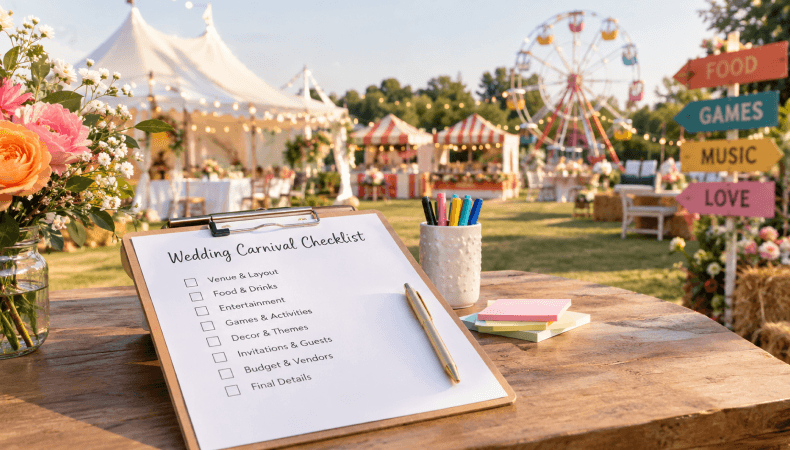
Here is an easy checklist that can be used to plan your wedding carnival in stages.
Stage 1: Early Planning (6–9 Months Before)
The early decisions impact everything else, so get started here.
Define your vision first of all. Choose a theme for your carnival – it may be anything like vintage fairgrounds, neon night, boho, or cultural fusion. Define roughly the number of your guests, because it will determine the size of the venue as well as the number of vendors needed, and choose the venue type (indoor, outdoor, or hybrid).
With your vision defined, create your budget. Divide it among venue, food, games, decor, entertainment and allocate a contingency fund of 10–15%. Determining the “must-haves” and “nice-to-haves” early on will prevent you from spending too much.
Now you should find your venue and make sure that it allows multiple activity zones, has outdoor areas with backup options of the indoor ones, and has no limitations regarding tents, generators, or open flames in case you need them for your food stalls.
Finally, start looking for vendors – carnival games rental services, food trucks or live counter catering vendors, entertainers or DJs.
Pro tip: Carnival specialists are in higher demand than the regular wedding specialists, so better book early.
Stage 2: Vendor Booking (4–6 Months Before)
Now that your vision is established, it’s time to secure the vendors who will help you realize your dream.
For games and entertainment, consider ring tosses, balloon darts, tic-tac-toe booths, a prize wheel, and even a kids’ area with face painting and other games. For food, consider food trucks, cooking stations, dessert stands, and beverage stations, all of which work within a carnival theme.
Entertainment brings it all together, with a live band or DJ, performers such as magicians or stilt walkers, and even a photo booth complete with carnival props. Both photography and videography should not be overlooked; make sure they are covered for both ceremony and carnival reception. Discuss candid and active shots versus formal photographs.
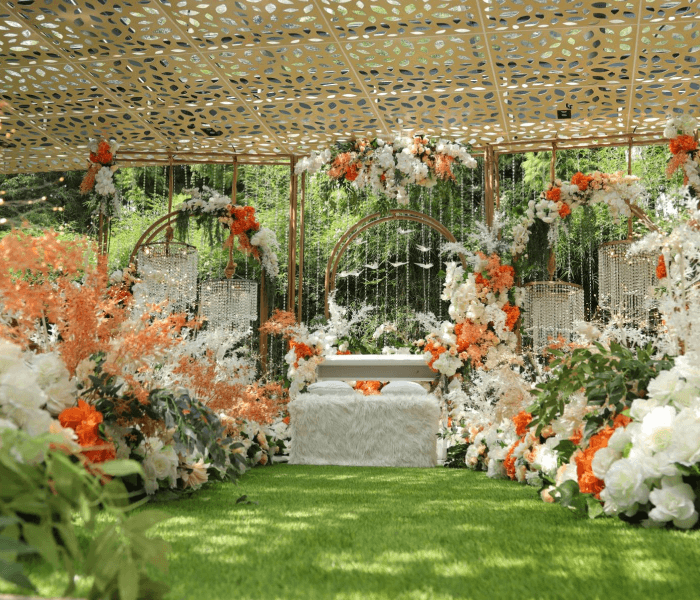
Decorations and rentals include tenting or canopies, string lighting and bunting, signs, and seating areas for guests who will want to take a load off after all that activity.
Always get written itemized quotes and confirmation of cancellation policy before signing any contracts.
Stage 3: Design and Layout (3–4 Months Before)
This is where you can start designing the look of your carnival.
Venue zoning should come first: allocate specific zones for food, gaming, photography, and lounging, ensure that walkways are spacious and activities that make noise are not located near lounging zones to allow your guests to go at their own pace.
The next thing on your agenda is to confirm your decor: decide on the colors that you want to use throughout your booths and tents, the type of signs that would complement your theme and lighting options that work well day and night.
Your menu and food stations should also be finalized by this point, depending on whether there are any food limitations and whether your food is going to be served buffet-style or at the seated tables.
Stage 4: Logistics and Details (1–2 Months Before)
Now that the major decisions have been taken care of, it is time to take care of the finer points.
Communicate your headcount figures to the catering and rental agencies, finalize the setup and dismantling times for all vendors, and go over the venue one more time to work out the exact positioning. Planning for weather contingencies comes into play now; you will need to make arrangements for back-up tents or indoor venues in case of rain or heat/warmth solutions in case of hot weather or cold in case of winter.
Add the carnival information to your invitation cards or wedding website; also mention the dress code and whether children will be allowed.
Stage 5: Final Week and Day-Of Checklist

This phase is all about confirmation, not making decisions.
The last phase involves confirming details with vendors, creating a timeline for the day for your wedding party, charging up battery-operated equipment, and packing a kit with basic supplies such as tape, extension cords, and first aid.
During the actual day, you should arrive early to do a complete tour of the place before the guests come, confirming that the zones have the proper staff in them and that everything is ready. In addition, you need to have another person there to answer questions from the vendors. A printed timeline, a basic help center for the guests, and some quiet time together walking through the venue will make it less stressful.
Wedding Carnival Day-Of Checklist
On the big day itself, focus shifts to execution and enjoyment.
Before Guests Arrive
- Arrive early for a full walkthrough with vendors before guests arrive
- Confirm each activity zone is staffed and functional
- Check that signage, lighting, and pathways are all in place and clearly visible
During the Event
- Designate someone (coordinator or trusted friend) to handle vendor questions, so you’re not pulled away from your own celebration
- Keep a printed timeline on hand for quick reference, in case entertainment segments or food service need adjusting on the fly
- Set up a lost-and-found or help point for guests, especially useful for larger, family-friendly events
A Moment for the Couple
- Take a few minutes as a couple to walk through the space before it opens, so you can experience it the way your guests will
- Keep phones or a small emergency kit nearby (safety pins, blotting paper, breath mints) for quick fixes between activities
Essential Vendor Checklist Summary
Use this quick-reference list when finalizing your vendor lineup. Each category plays a distinct role in bringing the carnival experience to life, so treat this as your master list when comparing quotes and confirming bookings.
Venue and Setup
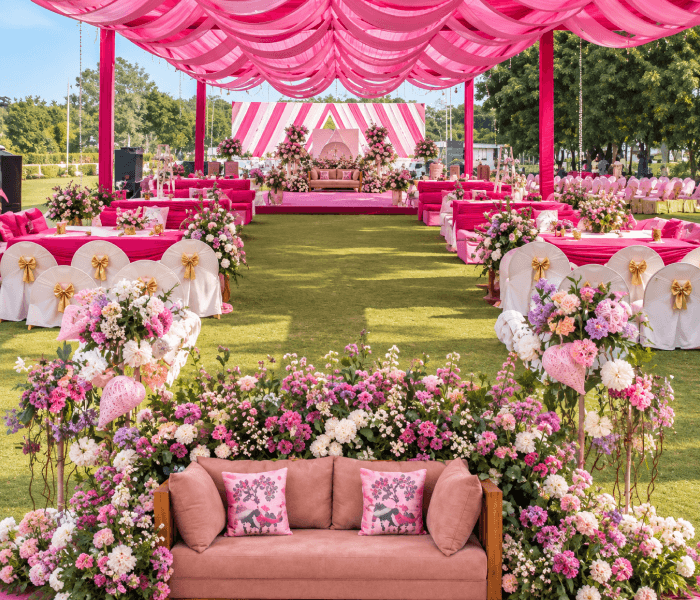
- Venue (indoor, outdoor, or hybrid space)
- Decor and tent rental company
- Lighting specialist (for evening carnivals)
Food and Entertainment
- Carnival game rental company
- Food trucks or live-counter caterers
- Dessert and beverage stalls
- Entertainment (DJ, band, performers)
Documentation and Coordination
- Photography and videography team
- Photo booth with props
- Day-of coordinator or planner
Having a coordinator on this list isn’t optional for a carnival-style wedding — with so many vendors operating simultaneously, someone needs to keep everyone on schedule while you focus on your guests.
Read Also: Wedding Planning Checklist – A Guide To Plan Your Dream Wedding
Budgeting Checklist by Category
Breaking your budget into categories makes it easier to track spending and spot where costs might creep up before they become a problem.
Fixed Costs
- Venue: rental fee, permits, insurance if required
- Decor: tents, lighting, signage, florals
Experience Costs
- Games and activities: rental fees, staffing, prizes
- Entertainment: performers, DJ/band, photo booth
Food and Documentation
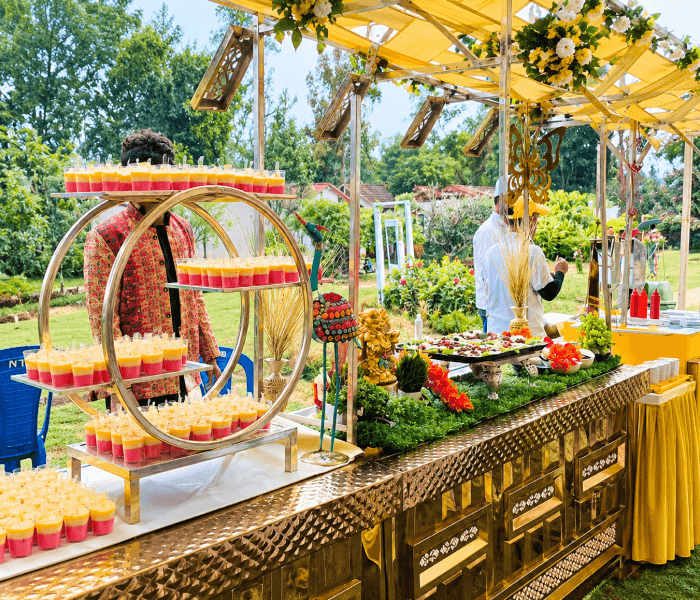
- Food and drinks: catering, dessert stations, beverage service
- Photography: photographer and videographer packages
Buffer Costs
- Miscellaneous: contingency fund, transportation, staffing tips
A good rule of thumb is to review each category monthly as vendor quotes come in, rather than waiting until final payments are due. This gives you room to reallocate funds — say, shifting extra budget from decor to entertainment — without derailing the overall plan.
Common Mistakes to Avoid
Even well-organized weddings and carnivals face preventable problems at times. These include:
- Over-crowding the carnival setup: More booths within a limited space will only create confusion
- Lack of preparation for weather: There must be a plan B when hosting an outdoor carnival
- Neglecting staffing requirements: Each section of activities should have someone overseeing it
- Failing to prepare a schedule: The absence of which leads to poor coordination between vendors and the organizers
- Over-budgeting on games and under-budgeting on food: Balance is important, because people remember games as much as the food
- Inattention to accessibility: People must be able to navigate through and get around easily
Tips for a Stress-Free Wedding Carnival
There are just a few simple steps that will make the planning process easier.
- Secure specialty vendors for your carnival early, as there’s lots of demand for their services
- Focus on 2-3 signature activities rather than incorporating everything into your carnival
- Designate an event coordinator, so you won’t be stressing about logistics during your wedding
- Have one last walk through with vendors prior to the event to ensure proper placement
- Prepare your backup plan for potential problems with weather, staffing, or vendors
- Allow yourself some extra time between the ceremony and the opening of the carnival
Conclusion
Planning a wedding carnival can be among the most interesting activities — but in order to make everything run smoothly, you need careful planning. Every step in your planning process will be important for organizing a great event for you and your guests.
This list can be your guide — but don’t hesitate to change the list in accordance with your wishes and needs. Planning should not aim at fulfilling all points of the list; it should rather help you organize the celebration of your dreams.
With the help of a good plan, you can organize a carnival which your guests will remember forever.