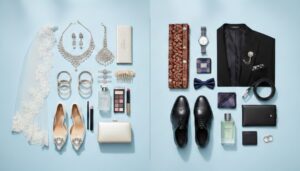
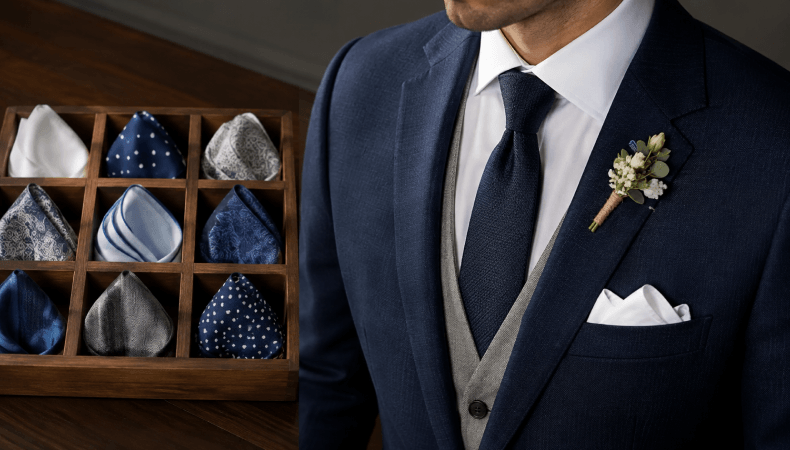
Every groom has a picture in his mind of stepping up in front of a full-length mirror looking partially dressed and knowing something feels missing. That’s the empty breast pocket. A pocket square fixes that entirely. It’s the smallest and most obvious detail that can complete a whole wedding outfit.
How to Choose a Wedding Pocket Square That Completes Your Outfit
Your choice of square looks forward before you even touch a single fold. The wrong material, shade, size can bring a suit from “serious” to “I just stole it off the rack.” Picking correctly takes less time than most grooms anticipate and makes everything that follows a breeze.
1. Pick the Right Fabric for the Wedding
Bubbles-corking-warm-fabric, spongy-tailed, half-dirty-water-bottle material? The wrong texture and shift in your look.
Select the right fabric for the wedding ceremony and season.
- Silk: Traditional choice for semi formal and formal weddings. We love the visual of silk caught in bright light and its ability to hold structured folds, it basically speaks for itself. Great for indoor ceremonies and evening receptions.
- Linen: Easy and textured and perfect for any outdoor or garden wedding. Its loose drape fits best with a puff fold. You look intentionally relaxed rather than ashamed of your lack of style.
- Cotton: Crisp and versatile. Cotton keeps its folds clean better than most cloths, and works in both formal and casual wedding settings. A superb option for daytime ceremonies.
- Wool or cashmere: For streamlined winter weddings. These fabrics provide the texture and warmth of a fuller suit, but don’t clobber your look.
- Velvet: For maximalist evening receptions or winter ceremonies. Not for the minimalist groom.
2. Choose a Color That Works With Your Suit
You might be tempted to match your pocket square to your tie, but that creates a uniform look that comes across as an afterthought. Instead, consider the following approach.
Work with the color family, not the exact match. A navy suit and burgundy tie pair wonderfully with a pale blush, grey lime, or dusty rose pocket square. You want your pocket square to look intentionally coordinated, not predetermined.
If you’re in a white or ivory suit, you’re pretty much good to go with any color. Dusty blue, sage green, terracotta or champagne all work well. However, think of how saturated it’s going to be against your light suit. No need for neon colors and you don’t want it super dark.
White and ivory pocket squares are vexatious, forever correct for classic black or charcoal suits. Want to show some personality? A very subtle pattern in a muted tone does the trick without battling the suit.
3. Match Patterns Without Looking Too Coordinated
Most grooms either do it with flying colors or go overboard. The simple rule is: you can mix patterns only if they are different sizes.
A fine pinstripe suit means a medium check pocket square works. A solid tie matches a very subtle geometric square. A floral square is an excellent partner of a plain suit, provided the rest is plain. The pitfall is putting the same pattern on top of itself (checking against checking or streaks against streaks) creating a visual thwack instead of personality.
The safer route for those less confident is a solid pocket square against a patterned tie or a subtly patterned square against a solid tie. Neither combination goes wrong.
4. Get the Right Pocket Square Size
We don’t talk about a pocket square’s size nearly enough, but it matters. Too small and you lose the whole square. Too big and you can’t fold it in at all, creating an annoying worry that it will take over your pocket.
- Standard size: 30 to 33 cm. Works for most suit jacket breast pockets and suits most fold styles
- Formal size: 38 to 43 cm. Better for structured folds on wider lapels
- Pocket depth: The square should sit 1 to 2 cm above the pocket edge when folded. Nothing more, nothing less
Wedding Pocket Square Folds to Try for a Polished Look
The fold you select can convey a message before you even speak. A sharp, straight fold at a black tie wedding means intentional. A casual puff at a garden affair means easygoing. Knowing how folds work and when a dress is due is all that separates a dapper groom from a well dressed one.
Read Also: 11 Best Tips to Design Your Wedding Outfit From Scratch
1. Classic Straight Fold for a Clean Formal Look
No other fold can interpret formal with such emphatic clarity. It works for black tie, church services and formal invitations.
How to fold it:
- Unfold your square and lay it flat on a clean surface
- Fold in half to create a rectangle
- Fold in half again to create a smaller rectangle
- Fold the bottom third up
- Fold the top down slightly to match your pocket depth
- Slide it in with only the straight side showing, sitting about 1 cm above the pocket
The point is to have the sharp, crisp edge emerge level and slightly above the pocket. Iron the square before this for best results.
2. Single Point Fold for a Sharp Finish
The single point is more characterful than a simple straight fold, while still being fairly formal. The pointing triangle at the top has a visually sharp flair that works well for structured lapels and formal suits.
The fold is done as follows:
- Lay the square flat, then fold it diagonally to make a triangle
- Fold the left corner two thirds of the way to the right point
- Do the same on the right corner, toward the left
- You now have a narrow shape with a summit pointing up
- Fold the lower part back to reduce bulk
- Fold the square in, with the point showing
The height of the point is up to you; it should not fall to the sides. The tip should be cleanly above the pocket.
3. Two Point Fold for Added Detail
It is close to the single-point fold. Both tips are seen outside. This makes it look lively but not too simple.
How to fold it:
- Fold the square from corner to corner. Do not align the two corners in a straight line
- This makes two mixed-height points
- Fold the left corner inside
- Fold the right corner inside
- To make the bottom thinner, fold it up
- Insert, with two points sticking out from the pocket
The two points must not be at the same height as it can look a little showy. Too precise, not stylish.
4. Puff Fold for a Relaxed Wedding Style
The puff fold is the most forgiving in terms of precision and the most appropriate for outdoor, garden, and casual weddings. It reads as effortless because it genuinely requires the least technical effort.
How to fold it:
- Pinch the pocket square in the middle and lift it off the surface
- Let it hang naturally to allow the rest of the fabric to bunch together
- With your other hand, gather the bottom together
- Do not flatten or try to mould the top into any shape
- Carefully tuck the bunched bottom section down into the pocket
- Let the rounded, soft top puff up naturally above the edge of the pocket
The puff fold does best with silk or linen that holds a soft drape. Cotton and anything stiffer fights the natural looseness of this fold.
Read More: Wedding Day Accessories for the Groom
5. Three Point Fold for a More Refined Look
The three point fold falls in the middle of the spectrum between high formal and highly expressive. It sends more personality than a straight fold but maintains enough structure for formal settings. It’s especially suited for slim lapel suits and more modern wedding looks.
How to fold it:
- Lay flat and fold into a triangle
- Make a second point by folding the left corner up at a slight angle
- Make a third point by folding the right corner up at a slightly different angle
- If you do it right, all three should be at slightly different heights
- Fold the base section up to minimize bulk in your pocket
- Insert carefully, keeping all three points distinctly displayed
- Patience is key. Rush this and all your points will collapse
How to Keep Your Pocket Square Neat Throughout the Wedding
If your pocket square fold falls apart an hour into your reception, then having the perfect fold doesn’t matter. There are a few simple tricks to ensure everything stays put through the wedding ceremony, photo sessions and late night dance floor.
- Slip a small piece of card, or purpose made pocket square holder insert, in the breast pocket. This provides structure to the fold and stops the pocket square from sinking or drifting.
- Lightly spray the square with fabric spray (light hold) after you fold but before you insert. This maintains the linen or cotton squares but won’t create any visible stiffness.
- Don’t play with the pocket square throughout the day. Every touch alters the fold slightly so get it right before the ceremony and leave it.
- Brief the photographer to check the square before photos rather than risking adjusting it yourself during the ceremony.
- For late night dance floor weddings, the puff fold is most robust as any movement can actually help the look rather than alter it.
How to Style a Pocket Square With Different Wedding Outfits
| Wedding Outfit | Recommended Fold | Best Fabric | Colour Approach |
| Black tie tuxedo | Straight or single point | Silk | White or ivory only |
| Classic navy suit | Single or two point | Silk or cotton | Burgundy, blush, or pale gold |
| Grey morning suit | Three point | Silk | Champagne, ivory, or dusty rose |
| Ivory or cream suit | Puff fold | Linen or silk | Sage green, dusty blue, terracotta |
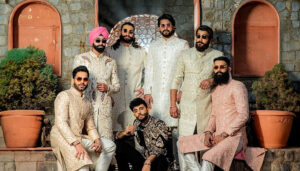
| Sherwani or bandhgala | Puff fold | Silk or brocade | Coordinate with outfit embroidery tones |
| Linen suit for outdoor wedding | Puff fold | Linen | Natural tones, white, or soft olive |
| Dark charcoal suit | Straight or single point | Cotton or silk | White, silver, or pale blue |
Pocket Square Color Ideas for Different Wedding Styles
- Classic white wedding: Crisp white pocket square in silk for timeless formality
- Floral garden ceremony: Sage green, dusty rose, or soft coral in linen
- Black tie evening reception: White, ivory, or deep burgundy in silk
- Rustic barn wedding: Warm terracotta, mustard, or olive in cotton or linen
- Beach or destination wedding: Pale blue, aqua, or sandy cream in lightweight linen
- Winter wedding: Deep green, wine red, or navy in silk or cashmere
- Modern minimalist wedding: Pale grey, white, or blush in crisp cotton
- Indian traditional ceremony: Gold, saffron, or ivory in silk or brocade
Pocket Square Styling Mistakes to Avoid at a Wedding
- Matching the pocket square exactly to the tie: Creates a uniform look that appears over coordinated rather than intentional
- Using a pocket square that is too small: It disappears inside the pocket or sits too low to read as a style choice
- Choosing a stiff fabric for a puff fold: Structured fabrics resist the soft drape the puff fold requires. Use silk or linen for this style
- Pressing every fold to a sharp crease: Some folds are meant to feel relaxed. Over pressing the puff fold eliminates the effect entirely
- Adjusting the pocket square repeatedly during the day: Each touch shifts the fold. Set it once and leave it
- Matching the pocket square to the bridesmaid dresses exactly: A related tone works far better than a direct match
- Ignoring scale when mixing patterns: Pairing a striped suit with a striped pocket square creates visual confusion. Always vary scale between patterns
- Leaving the breast pocket completely empty: Even a simple white cotton square in a straight fold is significantly better than nothing
Conclusion
Folding a pocket square only takes a minute but it adds value to your wedding outfit. It can give you a subtle personality while keeping the formal atmosphere and when you see the photos, you’ll be surprised at its effect. Choose a good fabric, but not too formal. Pick a colour that goes well with your suit but not of the same shade and lastly, when folding the pocket square, choose a style that is suitable for the ceremony. Remember, small things can make a big impact.