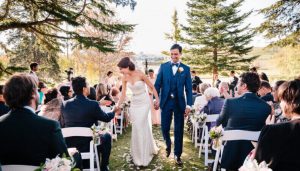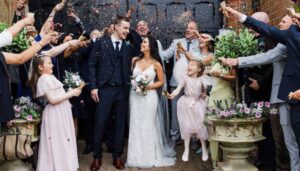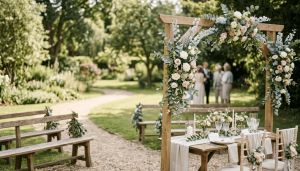
We have broken down the processional orders for different types of weddings. Looking for a traditional ceremony? Or thinking about being a little unconventional? Learn about the correct order to follow.
The procession is where everybody actually feels there is a wedding going on. The walk is there before everything, the vows, before the first kiss, before anyone says “I do.” Some of the simplest of things to do, walking, carries a lot more weight in that moment than you think.
We have summarized some of the traditional and modern procession orders that are generally followed, so you can take a little time out from all the anxiety and pressure of the wedding week.
What a processional actually is
A wedding processional marks the formal start of the ceremony. It is the moment when family members and the couple make their way down the aisle, usually in a choreographed manner. The guests are already seated. And one by one, the couple takes their places at the front.
This walk will set the tone of everything that comes after; it is not just moving people from one corner of the field to another. You can choose upbeat music and be a little unconventional, or choose the more traditional, solemn entrance. Whichever one you choose, your guests will find their energy shift towards that mood.
Most processionals last between five and seven minutes, though the exact length depends on various things like the number of participants in the procession and the size of the venue. A small wedding party can complete the walk in under three minutes. A large one can stretch closer to ten.
The order
There is no central authority mandating a single correct sequence, which has led to different opinions and influencers on the “correct” order. Different cultures have developed their own variations over time.
Traditional catholic order
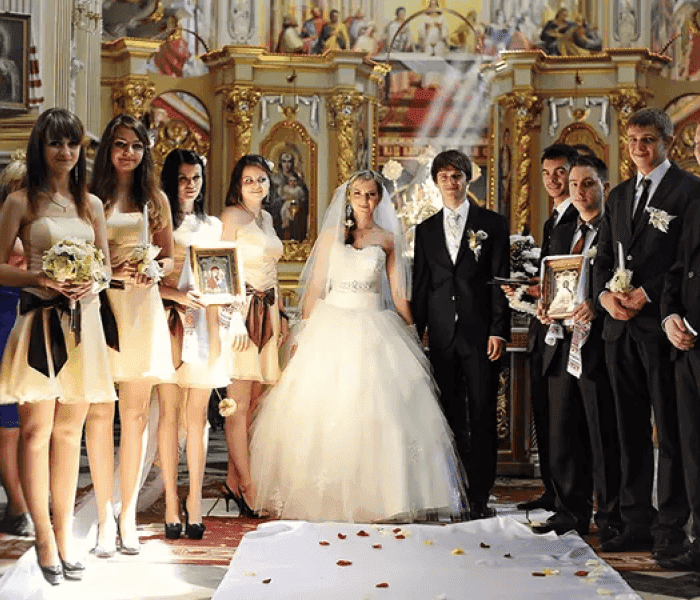
When walking down the aisle together during a Catholic wedding, the wedding party should enter the venue in the following order: males on the right and women on the left. The priest is in the middle of the altar, the bride and her bridesmaids are on the left, and the groom and groomsmen are on the right.
1. Priest, Groom, and Best Man
The priest will enter from the side of the venue along with the groom and his best man and take their respective places at the altar.
2. Bridesmaids and Groomsmen
Starting with the attendants, who will be the furthest away from the bride and groom, the bridesmaids and groomsmen proceed down the aisle in pairs. The couple separates from the crowd when they get to the end of the aisle. The first bridesmaid turns left and positions herself farthest from the bride, while the first groomsman moves right and positions himself farthest from the groom.
3. Maid of Honor/Matron of Honor
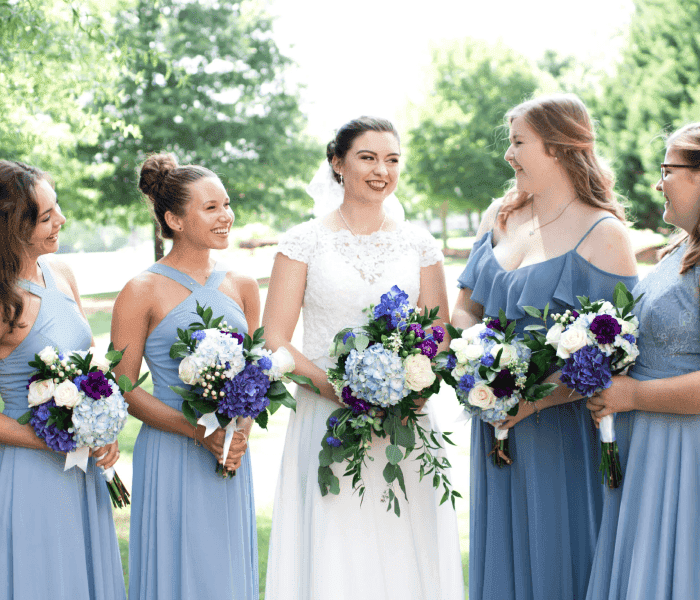
One of her maid of honor’s responsibilities is to make sure the bride’s veil, dress, and train look flawless before she goes down the aisle. After that, she stands on the bride’s left as she moves down the aisle. During the ceremony, she might hold the bride’s bouquet of flowers and give it back to her after the kiss.
4. Flower Girl and Ring Bearer
The ring bearer may enter before the flower girl, or the kids may walk together. The wedding rings are traditionally carried by the ring bearer attached to a cushion (or ring decoys, if he is too young to be trusted with the real things; in such a situation, the best man would hold the actual rings). The flower girl either carries a tiny arrangement of flowers or a basket filled with flower petals that she scatters while walking. They might be seated with their parents once they get to the front.
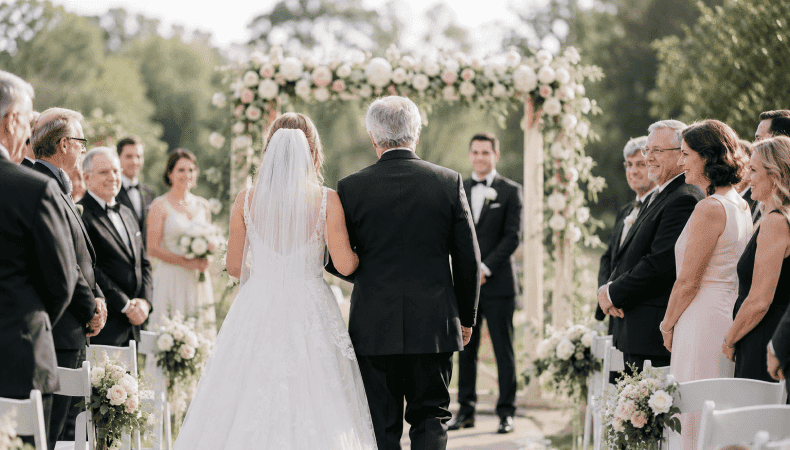
5. Bride and Father of the Bride
Her father escorts the bride down the aisle. After escorting the bride to the end of the aisle, he should sit beside the bride’s mother in the first row.
Traditional christian ceremony
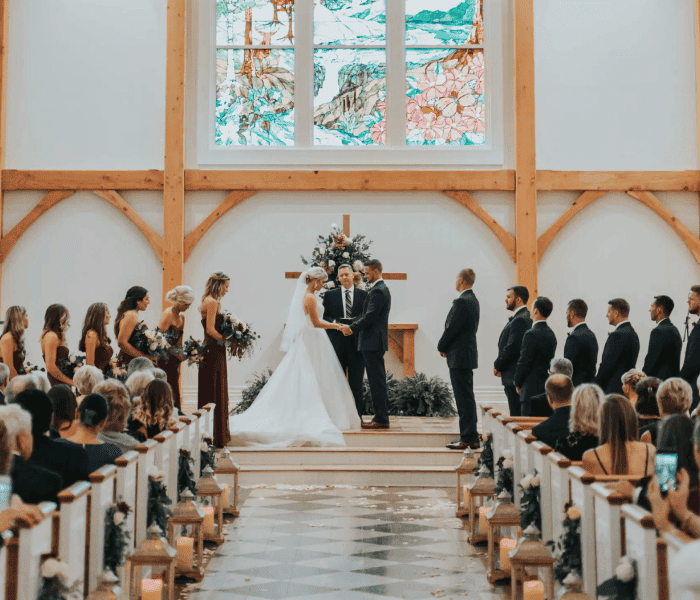
When walking down the aisle together, the wedding party should enter the ceremony location in the following order: males on the right and women on the left. The bride and her bridesmaids stand on the left side of the altar, the officiant is in the middle, and the groom and groomsmen stand on the right.
Read More: Trending Decor Ideas For A Modern Christian Wedding
1. Officiant
The first place in the processional is typically given to the officiant. Some couples, though, want to have the officiant lead the groom and groomsmen to the altar by entering the ceremony from the side of the venue.
2. Groom
Although it is customary for the groom to walk down the aisle by himself, some grooms would rather have both parents accompany them. Some guys would even enter the ceremony from the side of the venue after the groomsmen and the officiant.
3. Best Man
He walks down the aisle solo, following the groom.
4. Groomsmen
They can walk down the aisle either alone or in pairs. The first groomsman is positioned farthest from the groom as they take their positions up front.
5. Bridesmaids
They do the same thing as the groomsmen; they can walk alone or in pairs. They take their places up front, with the first bridesmaid standing farthest from the bride.
6. Maid of Honor/Matron of Honor
She should do one last inspection to ensure the bride’s veil and dress are perfect before she comes down the aisle. After that, she stands on the bride’s left as she moves down the aisle.
7. Flower Girl and Ring Bearer
The children can walk together, or the ring bearer can enter before the flower girl. Once they’ve reached the front, they may be seated with their parents.
8. Bride and Father of the Bride
Her father escorts the bride down the aisle. He gives her away, lifts her veil, kisses her, and sits next to the bride’s mother in the front row.
9. Parents of the Groom and Mother of the Bride
The bride’s mother and the groom’s parents should take their seats just before the ceremony starts. The parents of the groom sit on the right side of the first row. The bride’s mother sits in the first row on the left, escorted by an usher or family member.
Same-sex ceremony
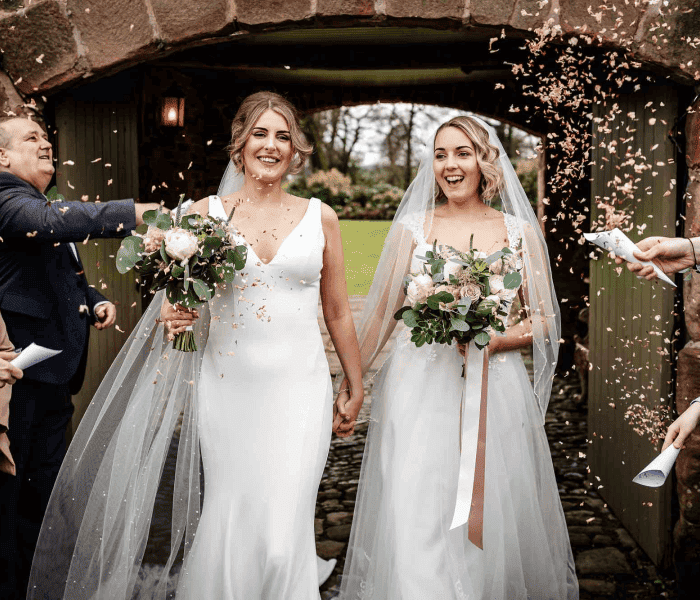
When walking down the aisle together, the wedding party should enter the ceremony site in the following order: Partner #1’s attendants on the left, and Partner #2’s attendants on the right. The officiant is positioned in the middle, with Partner #1 and attendants standing on the left and Partner #2 and attendants standing on the right.
1. Officiant
The officiant is usually present at the opening spot in the processional. Although they can choose to enter the walk from the side of the venue to take their place.
2. Wedding Party
Starting with the attendants who will be the furthest away from the newlyweds, members of the wedding party, one attendant from each side, will walk down the aisle in pairs. When they get to the end of the aisle, the attendant of Partner #1 takes the spot farthest from Partner #1, and the attendant of Partner #2 takes the spot farthest from Partner #2.
3. Best People
The best person for Partner #1 and the best person for Partner #2 go down the aisle together. As an alternative, each participant may walk down the aisle by themselves. When they get to the end of the aisle, Partner #1’s attendant will stand beside Partner #1, and Partner #2’s attendant will stand behind Partner #2.
4. Flower Person and Ring Bearer
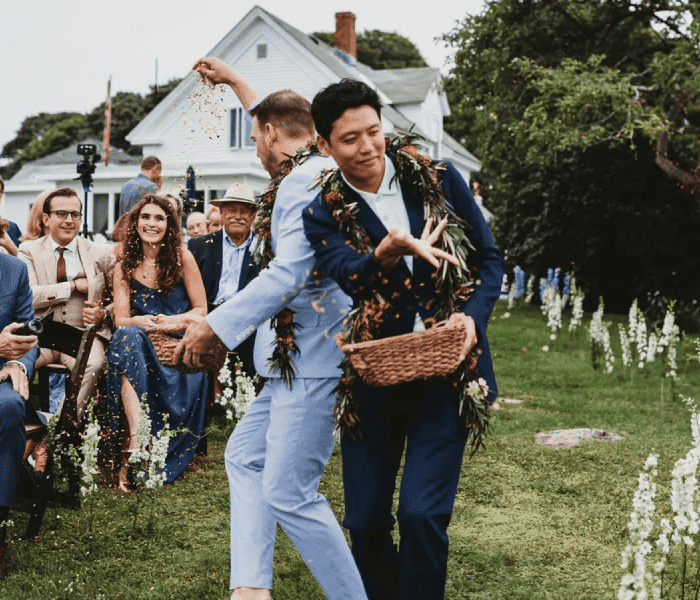
The youngest attendants can go one at a time or in pairs. They might be seated with their parents for the length of the ceremony once they’ve arrived at the front.
5. Partner #1 and Parent(s)
Partner #1 takes their place up front and walks down the aisle with their parent(s). After that, their parents will sit on the left side of the first row.
6. Partner #2 and Parent(s)
With their parent(s) accompanying them, Partner #2 takes their place up front and walks down the aisle. After that, the parents sit on the right side of the first row.
Final word
This procession will be the first thing your guests see at the venue, and it is also the only time everyone will be quiet. Don’t feel pressure in that moment of silence, remember that everyone there is only present because of you, take in that attention.
Related Posts