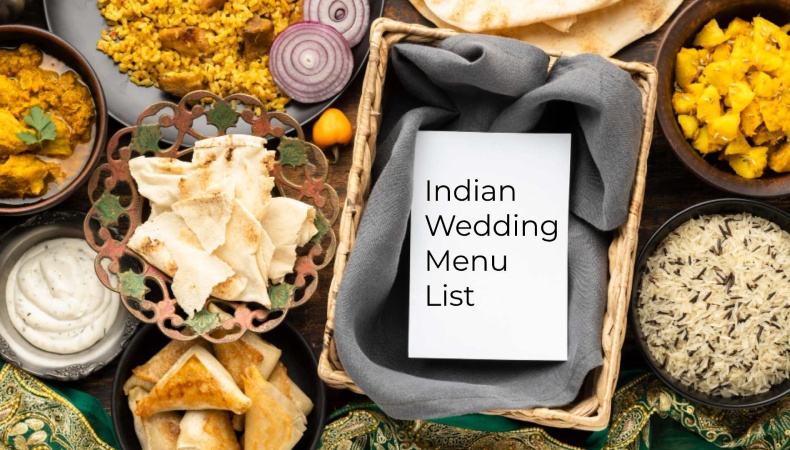
This guide breaks down winter-ready Indian wedding buffet ideas that serve warmth, richness, and season-friendly comfort on a plate. We cover curated dishes for all taste types and palettes to help you host a memorable, crowd-pleasing experience.
Indian weddings treat food more as an emotion, less as a checklist item. Food plays a massive role in any Indian wedding: north to south and east to west. Although food choices may differ but the love behind it remains constant. Guests step into the venue expecting warmth, fragrance, and dishes that announce the wedding season with every bite. Winter weddings raise that expectation even higher. The cold air makes people gravitate towards richer gravies, slow-cooked kormas, hot desserts, and old-school comfort that feels festive.
The winter buffer allows you to stretch your creativity. Build a menu that carries depth, many textures, and bold aromas, without burning your guests’ hearts the next morning. The cold season supports many hearty ingredients, layered spices, and a wide selection of both veg and non-veg options that people line up for on the buffet line.
But with so, so many options to choose from, how do you get the best pick out of the bunch? We bring you the ultimate guide to help you out with everything you need to design a memorable winter buffet for an Indian wedding, starting all the way from welcome drinks and starters to desserts and the paan corner. We balance both vegetarian and non-vegetarian options with the intention to make your day extra special.
Why winter menus work so well for Indian weddings?
Winters make every dish you serve shine. Gravies stay super rich instead of melting under heat lamps. Guests enjoy heavier flavours with ease. Even the snacks feel more indulgent because the weather softens the intensity of spices. Hot drinks like kulhad chai or saffron milk are going to be favourites, and desserts such as halwa or rabri hit the table with renewed purpose.
What’s more important is that the cool temperature helps you present food at the right temperature. Caterers manage slow-simmering pots of fal makhani, tandoori stations with glowing embers, and chaat counters without worrying about ingredients going limp. Planning becomes so much easier.
A winter buffet only works when the flow of the food makes sense. Guests enter with cold hands. So, naturally, they would want something that is warm and immediate. They enjoy appetizers that carry a bit of heat and then move towards the main course. The full-course meal ends with desserts that comfort without being cloying. A thoughtful menu respects this rhythm. It offers familiar flavours, bold options, and packs in a few surprises. It also gives equal space to veg and non-veg options, since most weddings will have mixed crowds.
Choosing a winter buffet that feels balanced
Below is a full winter-ready buffet option that keeps this warm balance completely intact.
Welcome drinks

Cold nights pair perfectly well with warm beverages and thick, creamy drinks. Instead of the basic juices that most weddings will offer, we suggest that you lean into options that carry body and winter-friendly spices.
Hot drinks
- Kulhad chai with ginger or cardamom
- Masala tea with a stronger spice profile
- Filter coffee for guests who prefer a deeper roast
- Badam milk with saffron
Chilled drinks (for the younger crowd that still wants something cold)
- Mint lemon fizz
- Fruit punch
- Hawaiian blue
- Rose lassi
- Pineapple lassi
A clever mix of hot and cold drink options is the perfect way to satisfy different preferences without overcrowding one particular section. Because we know how hard it can be to grab a glass of a mocktail with tons of guest crowding the counter to get their orders.
Related Post: 55+ Wedding Reception Food Menu Ideas
Winter soups
Soups set the foundation for the evening. Guests will rarely skip this at a winter wedding because the first sip immediately restores warmth.
Veg options for soups
- Cream of tomato with roasted garlic
- Lemon coriander soup
- Sweet corn soup
- Hot and sour vegetable soup
Non-veg soup options
- Chicken manchow
- Chicken hot and sour
- Aromatic broth-based chicken soup with coriander.
Your buffet will work best when the soups stay easy to ladle and carry thickness without turning gluey.
Salads
Every winter buffet needs freshness. And with winter bringing in so much fresh local produce all over the country, we suggest that you aim for fresh, crunchy salad options. Our top choices for salads include
- Kosambari salad
- Fresh greens with toasted seeds
- Carrot and raisin salad
- Corn salad
- Kimchi-style salad
- Sprouted beans with lime
- Russian salad
Vegetarian starter options for winter wedding buffets
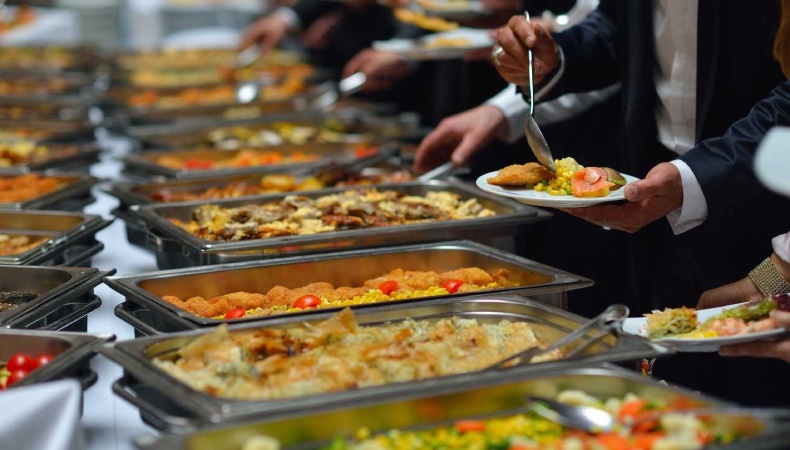
Winters are the perfect time to give your vegetarian appetizers more presence and love. Roots and winter vegetables crisp beautifully. Paneer holds its shape. Spices bloom better in the cold weather.
Top options for veg appetizers include
- Achari paneer tikka
- Paneer makhmali tikka
- Harabhara kebab
- Crispy baby corn
- Corn and aloo tikki
- Veg cutlets
- Gobi or paneer manchurian (dry)
- Tandoori arbi
- Cocktail samosas
Every dish should feel hand-crafted and not something that is mass prepared. Winter helps with this because the heat stays trapped inside each item.
Related Post: 2026 Indian Wedding Food Menu: Starters, Mains & Desserts
Non-Vegetarian starter options for winter wedding buffets
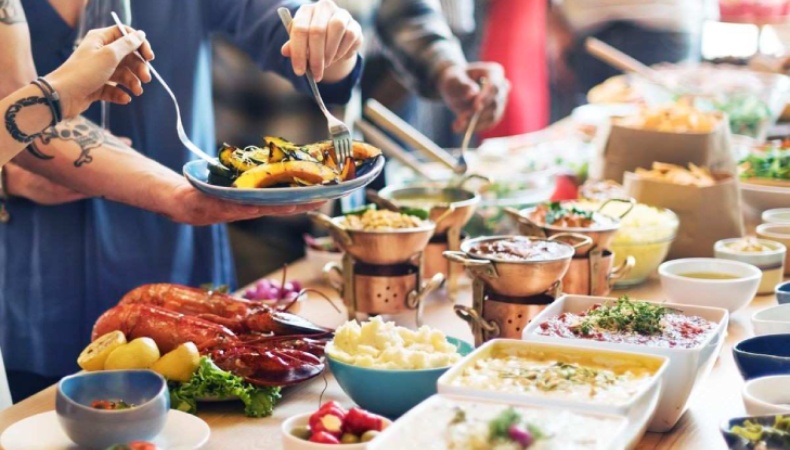
Good non-veg starters carry two qualities. Crisp on the edges and juicy at the centre. Winter boosts this both so we suggest you consider:
- Chicken tikka
- Chicken banjara kababa
- Thai-style crispy chicken
- Chicken manchurian (dry)
- Peri-peri chicken
- Chicken chilli
- Noodles-wrapped chicken
The goal here is simple enough: introduce a variety of textures without overwhelming the section.
Main course selections
Well, we have reached the main course now. The main course is what defines the wedding. It is what people will remember long after the event has ended. So, this is where a winter buffet needs the strongest planning. Gravies must stay warm and aromatic. Breads must arrive fresh and soft. Rice must remain fluffy.
Here are some of our top picks.
Vegetarian main course options
Winters gives you access to richer ingredients. Think slow-cooked gravies, earthy spices, and vegetables that stay defined even after simmering for hours.
- Paneer and vegetable gravies
- Paneer makhani
- Paneer jalfrezi
- Paneer lababdar
- Methi malai mutter
- Vegetable jaipuri
- Subzi miloni
- Aloo gobi
- Achari vegetables
- Banarasi dum aloo
- Bhindi do pyaza
- Kurkure bhindi
Daals
The spread of winter daals anchors the vegetarian spread. Top choices in this section include
- Daal makhani (simmered overnight if possible)
- Daal tadka
- Daal palak
- Masoor daal fry
- Dal panchrangi
- Dal bhukara
Rice
- Veg biriyani
- Jeera pulao
- Green peas pulao
- Veg fried rice
- Kashmiri pulao for a sweet, fragrant contrast
Non-Vegetarian main course options
Winters are going to be the perfect time of year to allow non-veg gravies to bloom fully as spices gain depth and the meat is able to absorb the flavours much better.
Chicken gravies
- Butter chicken
- Kadhai murgh
- Achari murgh
- Murgh Afghani
- Murgh Kolhapuri
- Murgh Patiyala
- Hyderabadi chicken
- Garlic chicken
- Dum ka murgh
- Murgh peshwari
Fish and egg
- Fish curry (Malwanio or Gassi-style)
- Egg masala
A winter buffet will often place non-veg gravies in heavier pots because it helps them stay warm and aromatic for much longer.
Indian breads to complete the spread
In winter, breads turn into an event of their own. Guests love the warmth and softness even more.
We suggest that you include a mix that caters to all gravy types:
- Butter naan
- Garlic naan
- Steaming rotis
- Roomali rotis
- Butter kulcha
- Pudina paranthas
- Lachha paratha
- Stuffed kulchas
Try opting for a live tandoor station that helps you serve everything hot and fresh.
Live counters guests always flock to
Live counters carry the same energy of a wedding. Guests love the movement, aroma, and the small theatre that happens when chefs work on the spot.
Top winter friendly counters
- Chaat counter
- Parantha station
- Pasta station
- Tawa vegetables
- Malpua corner
- Hot jalebis
- Dosa counter
- Momo station
Desserts that matter more in the winter

Winter weddings give Indian desserts the spotlight they deserve. Hot sweets hit differently when the air turns cold.
Hot Indian desserts
- Gajar ka halwa
- Moong dal halwa
- Beetroot halwa
- Shahi tukda
- Kesari kheer
- Rabri jalebi
- Malpua with rabri
Cold Indian dessert options
- Rasgulla
- Rasmalai
- Gulab Jamun (warm)
- Sandesh
- Baked rasgulla
- Western desserts
- Chocolate mousse
- Brownies with ice cream
- Assorted pastries
- Souffle
- Frozen desserts
- Kulfi falooda
- Kulfi rolls
- Ice cream bar
- Sundaes
Paan station
You simply cannot end an Indian wedding without paan. For winter menus, paan works perfectly well as a great mouth freshener.
Add variety:
- Fire paan
- Chocolate paan
- Strawberry paan
- Mitha paan
- Sada paan
- Betel-based mouth fresheners
This station always sees long lines at the end.
How to Balance a Winter Menu for a Mixed Crowd
A wedding buffet needs structure, not excess. Balance matters more than quantity. Aim for:
- At least three veg starters
- At least two non-veg starters
- Four to five veg gravies
- Two non-veg gravies
- Two dals
- Two rice preparations
- Five types of bread
- Two live counters
- Four Indian desserts
- One western dessert
- One frozen dessert
This keeps the menu rich but not overwhelming.
Final Thoughts
A winter wedding gives you the chance to build a buffet that people remember long after the lights fade. Guests will talk about the warmth of the soups, the richness of the gravies, the char on the kebabs, and the sweetness of the halwa. Winter gives each dish depth, aroma, and presence.
Think of the buffet as an experience. Give equal love to veg and non-veg sections. Add warmth wherever possible. Choose dishes that stay stable over time. And let your caterer refine the final layout based on crowd size.
The right winter menu does more than feed people. it becomes part of the wedding story.